

SpyFu with Rankerfox
Use SpyFu inside the Rankerfox Premium plan to compare SEO and Google Ads competitors, spot the queries they work on, review ads, isolate gaps, and decide where your next tests deserve attention.
Plan
SpyFu belongs to the competitive analysis tools available in the Rankerfox Premium plan.
Family
Organic competitors, paid competitors, ads, overlap, history, and tracking.
Routine
Spot what deserves a test, a page, closer monitoring, or a deliberate pass.
Read the market through competitors, not only through your own site
SpyFu becomes useful when a simple question appears: who already gets attention on this topic, who pays to be visible, which domains keep showing up, and which signals last over time? Its value is in connecting SEO and paid search instead of reading only one side of the market.
Identify domains that overlap on the same queries or ads, including rivals that may not be obvious outside search.
Read bought terms, tested ads, click estimates, and areas where a budget can be framed more tightly.
Spot questions, topics, and terms that several competitors already cover before deciding what to publish.
Compare several domains in one view to understand overlaps, shared segments, and opportunities worth checking.
Review movements, ad tests, and repeated signals instead of judging a competitor from a single snapshot.
Turn competitor monitoring into shorter decisions: test, improve, track, exclude, or postpone.
The SpyFu views to use first
SpyFu is most persuasive when each view supports a clear decision: understand overlap, find a gap, read an ad, or follow progress.
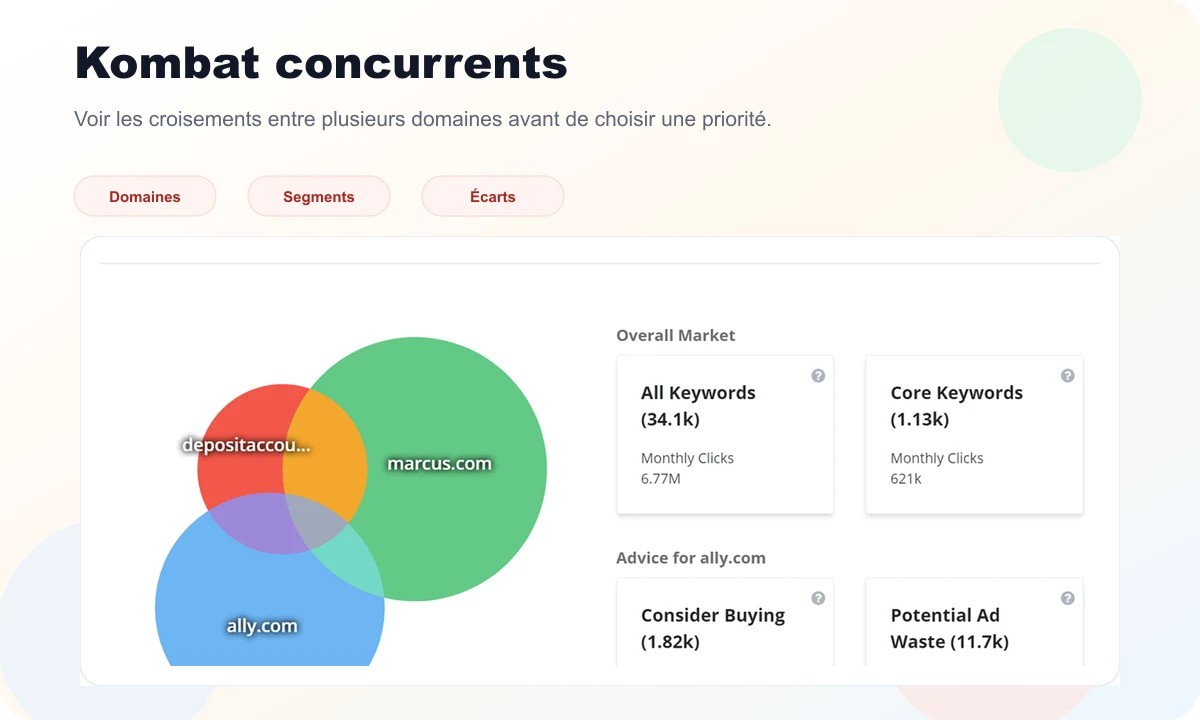
Kombat places several domains side by side. It helps separate shared queries, areas owned by each competitor, and topics already validated by multiple players.
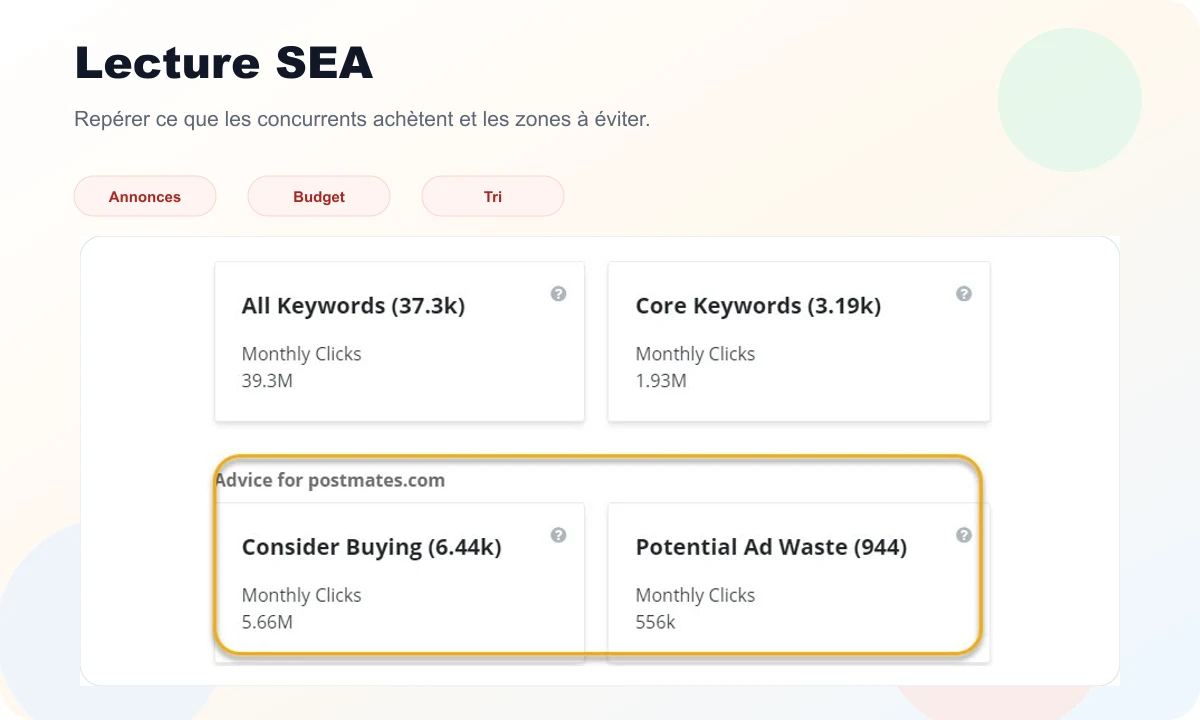
The paid angle shows what competitors actually buy. That helps prepare a Google Ads test, spot weak spend, or confirm that a topic attracts budgets.
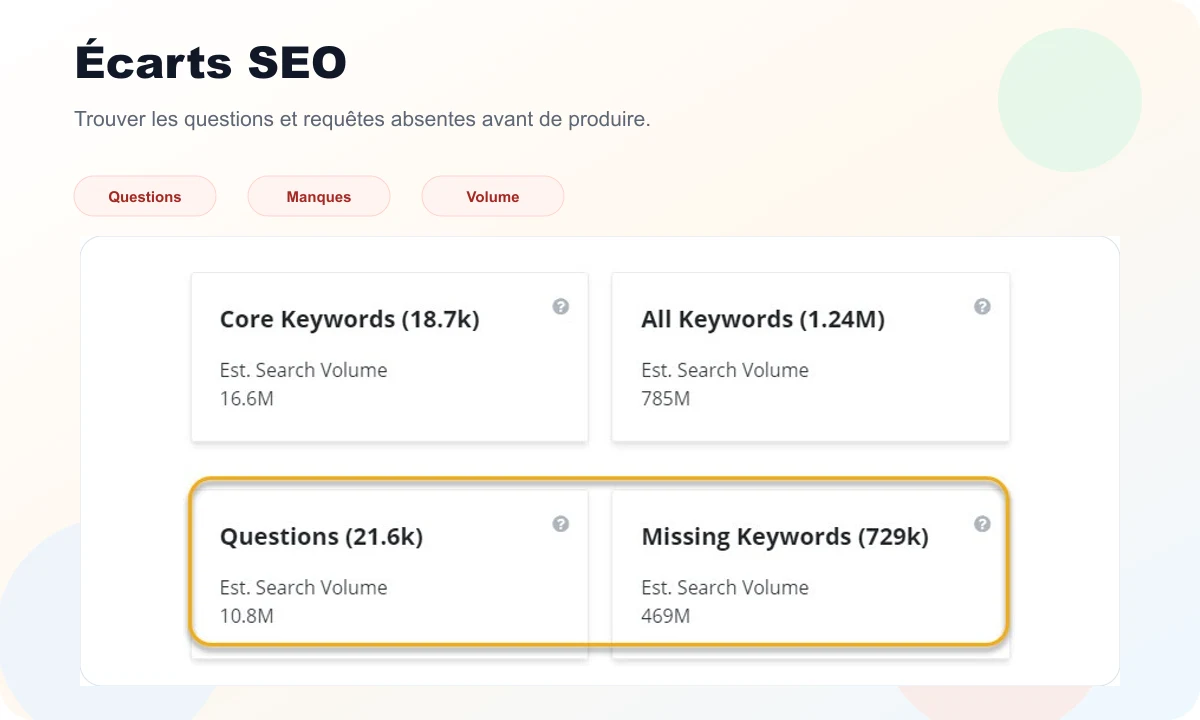
SEO segments help reveal questions and topics already handled by the market. The goal is not to copy, but to see what the site still does not answer clearly.
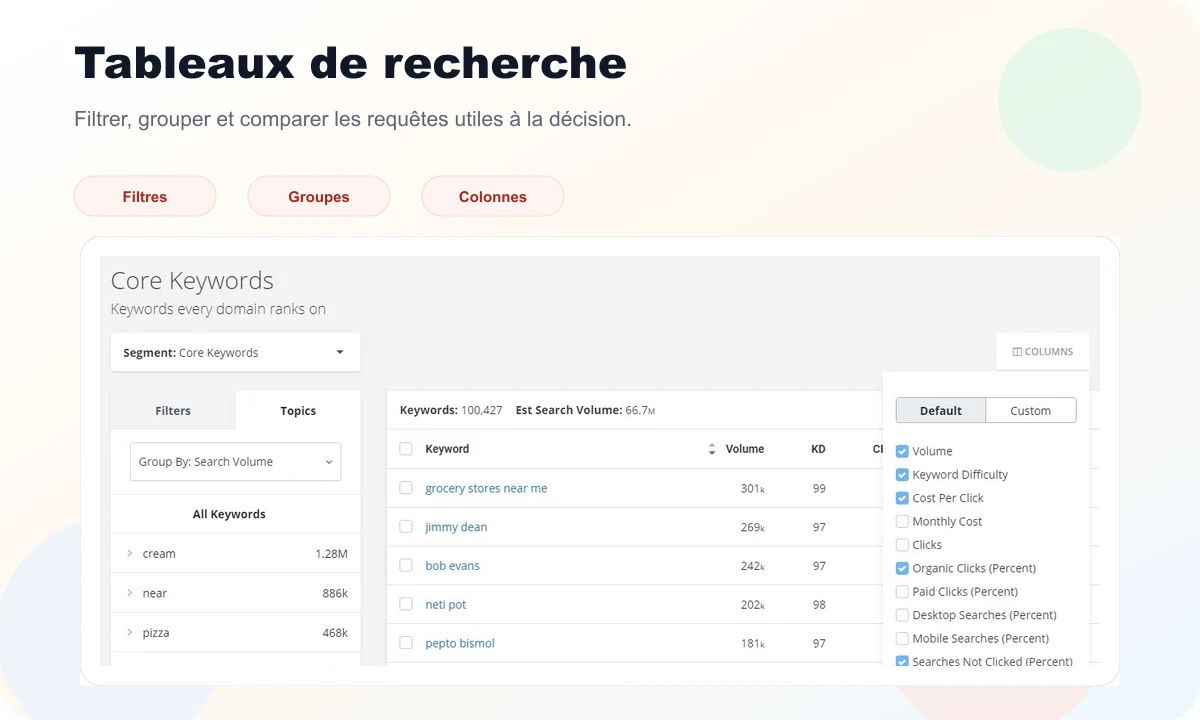
The tables provide the detail needed to sort by volume, estimated cost, difficulty, clicks, or groups. They keep decisions from relying on one visual card.
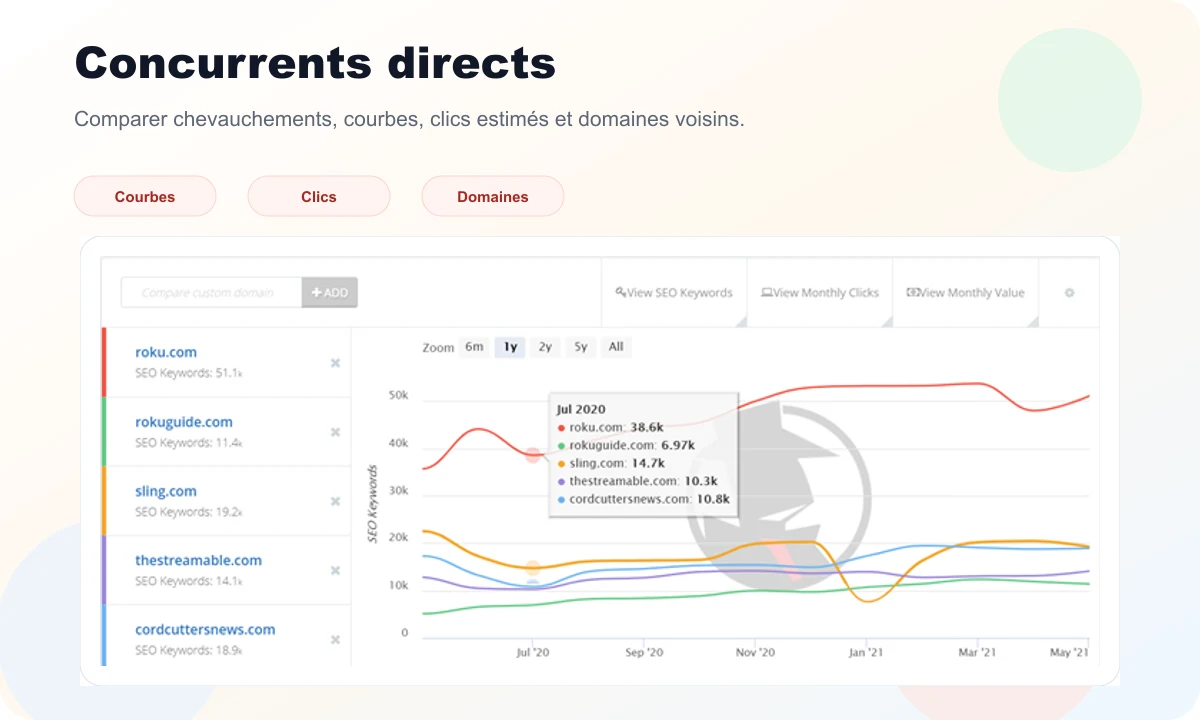
Competitor curves show nearby domains, estimated click gaps, and overlap. That makes it easier to choose the right rivals to track.
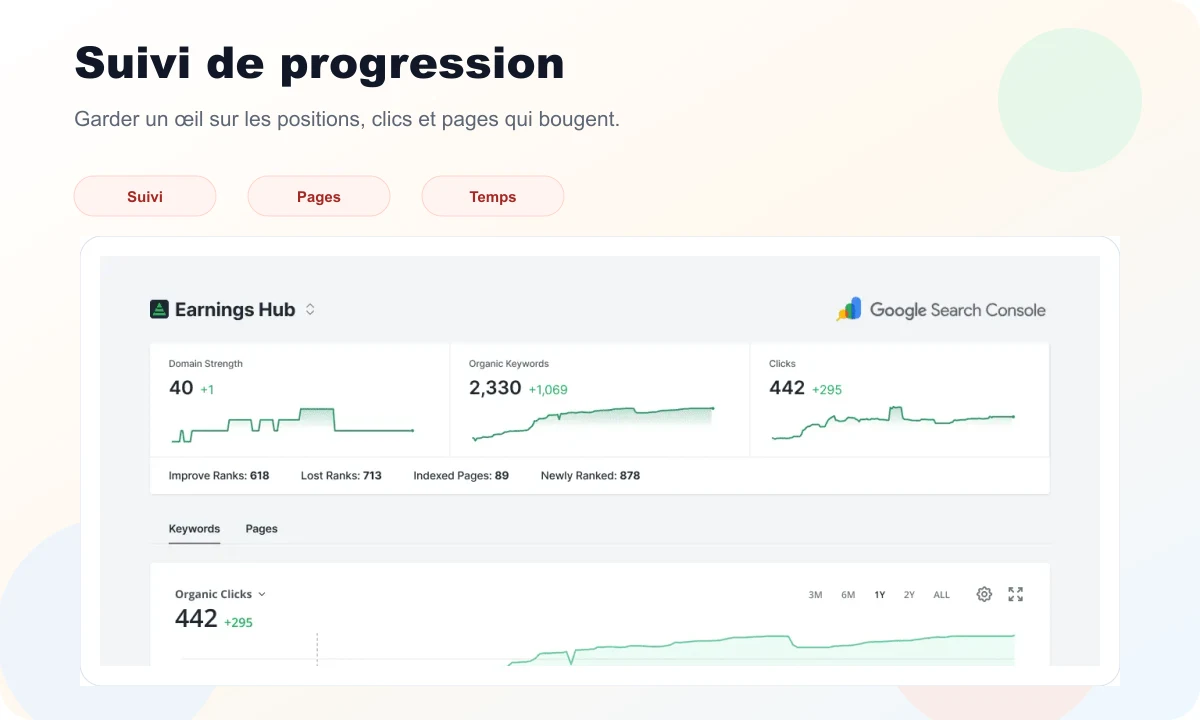
Tracking helps connect an action to movement. After a test, update, or new page, it becomes easier to decide whether to reinforce, wait, or change angle.
Where SpyFu makes a real difference
SpyFu is especially useful when the decision depends on both paid and organic competitors.
Before spending, SpyFu helps understand which terms recur across competitors, which angles seem tested, and where dispersion risk is higher.
- Do several competitors pay for the same theme?
- Do the ads repeat a clear benefit or promise?
- Are there terms to exclude before launching?
When several domains cover the same question, the tool helps decide whether the topic deserves a dedicated page or an upgrade to existing content.
- Does the topic appear across genuinely close competitors?
- Does demand look informational, commercial, or mixed?
- Does the site already have a page that can carry this angle?
Reading only one competitor can be misleading. Comparing several domains separates isolated habits from market signals.
- Which themes are common to every rival?
- Which gaps belong to only one domain?
- Which competitor is closest to the site being monitored?
Paid segments can help spot weaker terms, unnecessary overlaps, and leads to set aside before adding budget.
- Does the term attract useful clicks or mostly noise?
- Do serious competitors buy it too?
- Should it be tested, excluded, or grouped differently?
A routine that turns spying into sound decisions
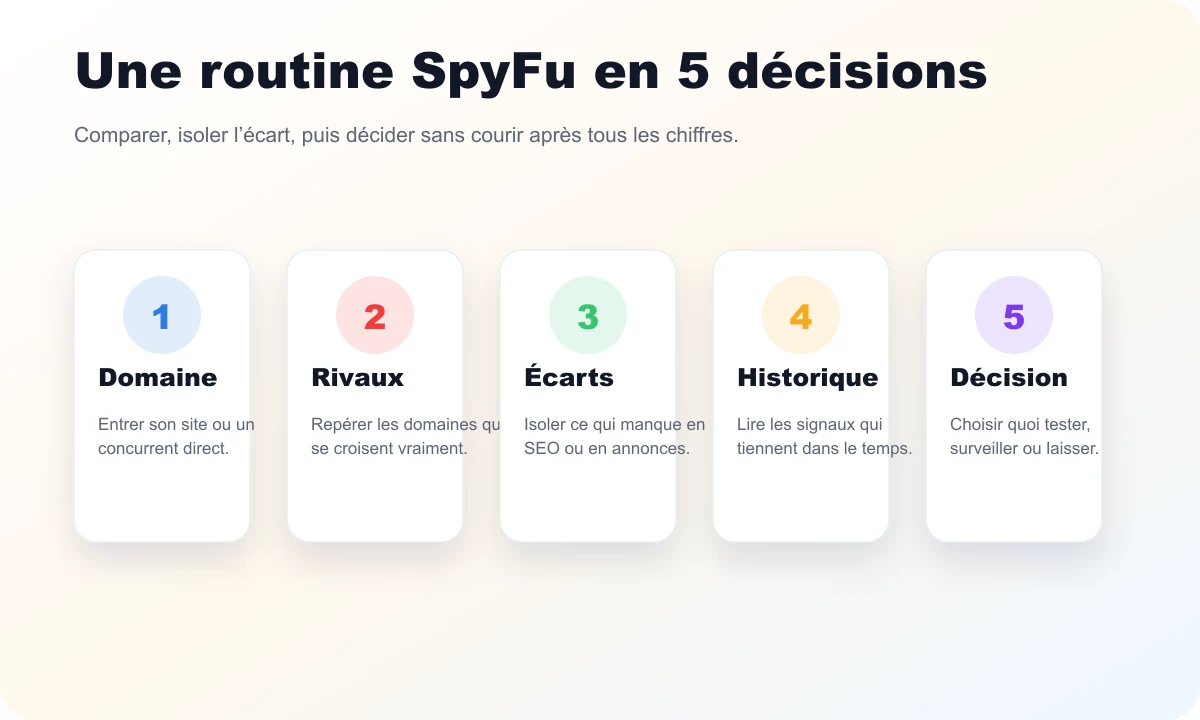
SpyFu can quickly make everything look worth checking. The best routine starts with one domain, chooses relevant competitors, isolates the gap, then checks the signal before acting.
Set the domain
Start from your site, a client, or a precise competitor so the research does not become too broad.
Choose rivals
Keep the domains that genuinely overlap on the same queries or ads.
Read gaps
Separate what is missing, what is shared by the market, and what looks specific to one player.
Check history
See whether the signal is recent, durable, isolated, or repeated before using it.
Decide the action
Turn the analysis into an ad test, page update, monitoring routine, or exclusion.
Turn competitor signals into concrete actions
SpyFu data is most useful when it reduces hesitation: publish, test, monitor, or leave the idea alone for now.
Should we launch a paid test?
Competitors buy the same terms, ads recur, and the topic seems active over time.
Prepare a short test with exclusions, a clear promise, and a limited budget.
Should we create a page?
Several visible domains answer the same question, but the site does not answer it well enough yet.
Create or improve a page only if the angle can deliver real value.
Which competitor should we track?
Curves, overlap, and estimates show which domains truly share the same terrain.
Follow two or three useful rivals instead of monitoring a long list of brands.
What should be left aside?
Some terms are not confirmed by close rivals or carry a signal that is too ambiguous.
Exclude, postpone, or group those leads instead of publishing a weak page.
Where SpyFu fits in the Rankerfox arsenal
SpyFu does not replace every SEO tool. It mainly strengthens competitor reading when organic and paid search should be viewed together.
Ubersuggest is more direct for framing a query, auditing a site, and following a smaller project.
SpyFu is stronger when the question is what competitors buy, test, and share.
SE Ranking is better suited to project tracking, audits, reporting, and structured SEO routines.
SpyFu adds competitor intelligence, especially when Google Ads influences the decision.
Semrush remains very broad for SEO, content, competitor, and advertising research.
SpyFu helps move quickly on paid rivals, ads, and gaps that are easy to compare.
Similarweb looks more at traffic levels, channels, audiences, and market dynamics.
SpyFu gets closer to queries and ads, where the decision becomes more operational.
Which Rankerfox plan includes SpyFu?
The 1€ trial for 7 days helps you check access, the interface, and your work rhythm before choosing a plan.
Standard already covers several useful needs, but SpyFu is presented here as a Premium plan tool.
SpyFu belongs to the Rankerfox Premium plan, alongside advanced competitive analysis, SEO, paid search, and tracking tools.
Pages to read around SpyFu
Frame a quick SEO research, audit, or simple competitor comparison.
Structure tracking, audits, rankings, and SEO reporting.
Dig deeper into visibility movements, SERPs, links, and offsite signals.
Compare trial, Standard, and Premium before choosing the right access.
Frequently asked questions about SpyFu with Rankerfox
Useful points to clarify before adding SpyFu to a competitor research routine.
Add SpyFu to a sharper Premium routine
Compare Rankerfox plans, check the access that fits your usage, then use SpyFu to read competitors with stronger SEO and paid search context.
Compare plans