

AMZScout with Rankerfox
Use AMZScout in the Rankerfox Premium plan to find Amazon product ideas, filter a large product database, read competition, track search terms, and decide whether an opportunity deserves deeper analysis.
Research
ideas, niches, estimated sales, price, reviews, and demand
Validation
quick Amazon-page reading before deeper analysis
Access
specialized tool for product research and marketplaces
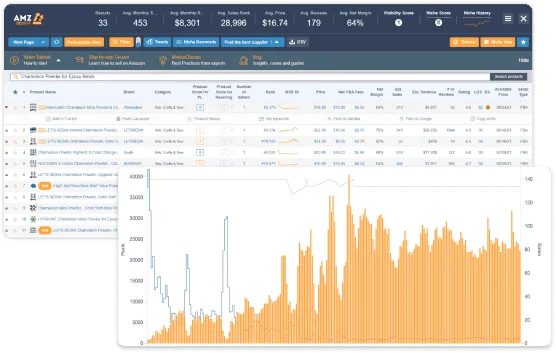
AMZScout PRO preview
Score, history, and product research in one reading
AMZScout helps move from product idea to shortlist
After SellerAmp and Jungle Scout, AMZScout adds another entry point into Amazon research: product database, extension, product tracking, search term tools, sales estimates, and supplier leads. The useful approach is to cross-check signals, then isolate a few products that can actually be compared.
Filter products by category, price, reviews, estimated sales, revenue, rank, weight, or listing quality.
Read an Amazon page with niche data, competition, price, estimated sales, history, and product potential.
Track products over time to see whether sales, prices, reviews, and demand signals remain coherent.
Explore buyer language, monitor rankings, and prepare a more relevant listing.
Estimate fees, price, margin, and economic feasibility before moving toward buying or selling.
Use AI features as analysis and listing support, without replacing market and margin checks.
What AMZScout actually helps you read
The value is not just a large table: filters, results, scores, tracker views, history, and keyword data help narrow a list of Amazon ideas down to a few genuinely comparable opportunities.
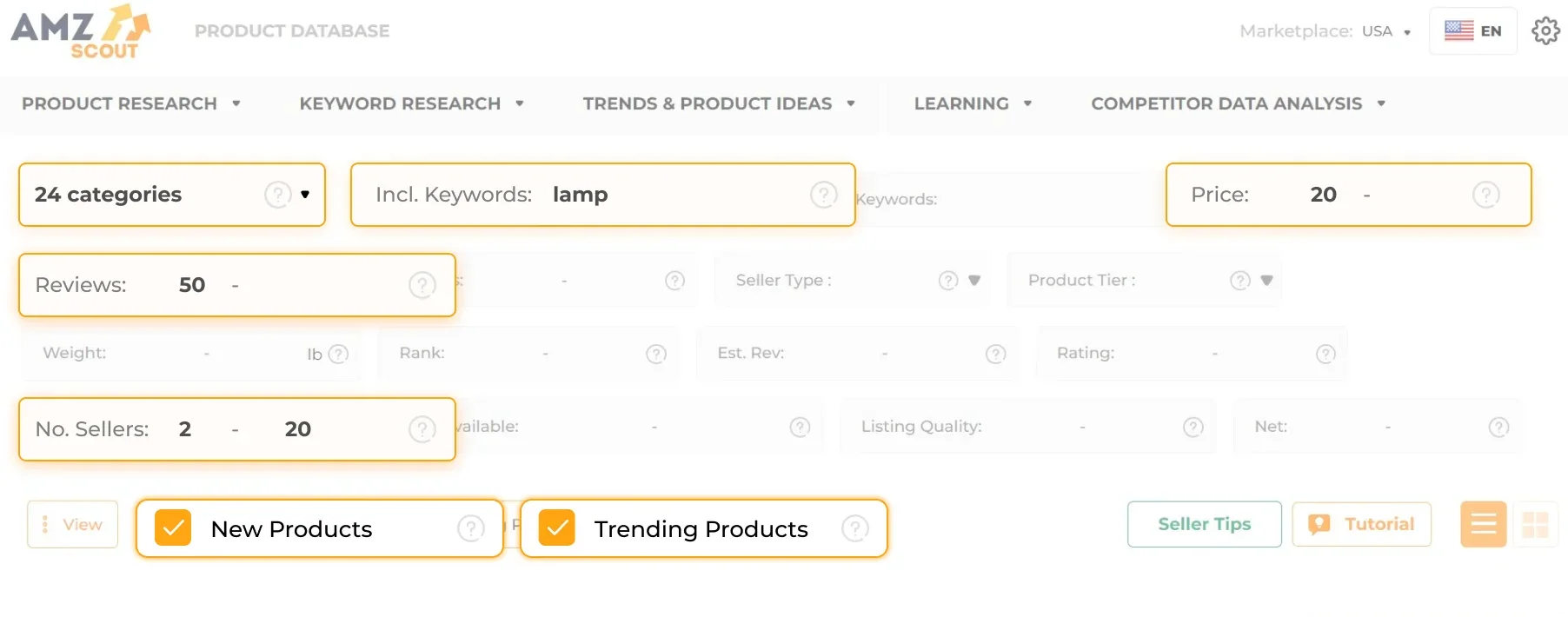
Start from category, price, reviews, sellers, keywords, and product profiles so the search does not stay too broad.
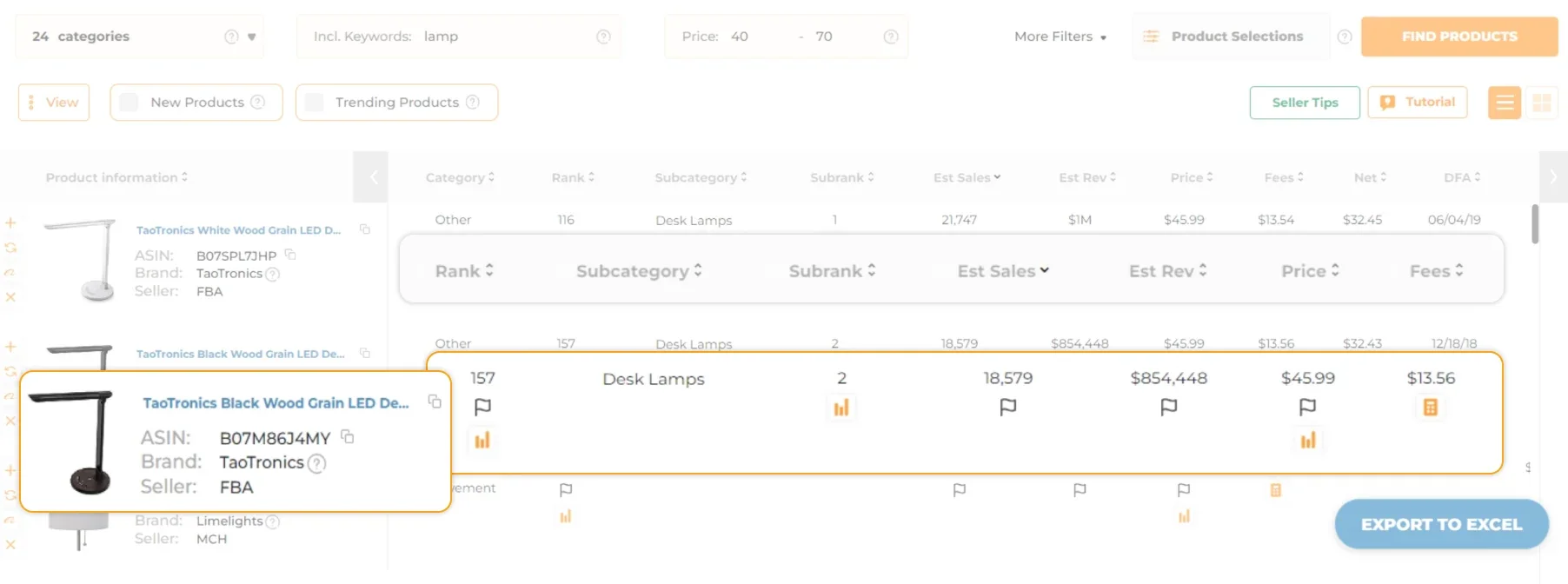
Read price, estimated revenue, reviews, sellers, weight, and listing quality to spot products worth a second look.
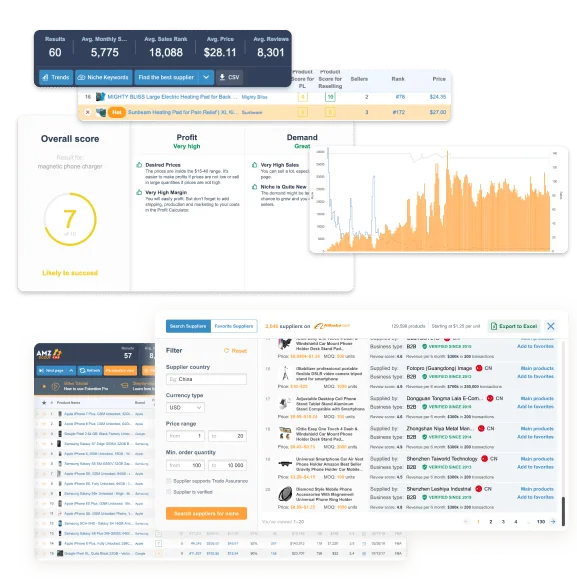
The extension brings key signals next to Amazon results: score, history, demand, competition, and first markers before opening a full analysis.
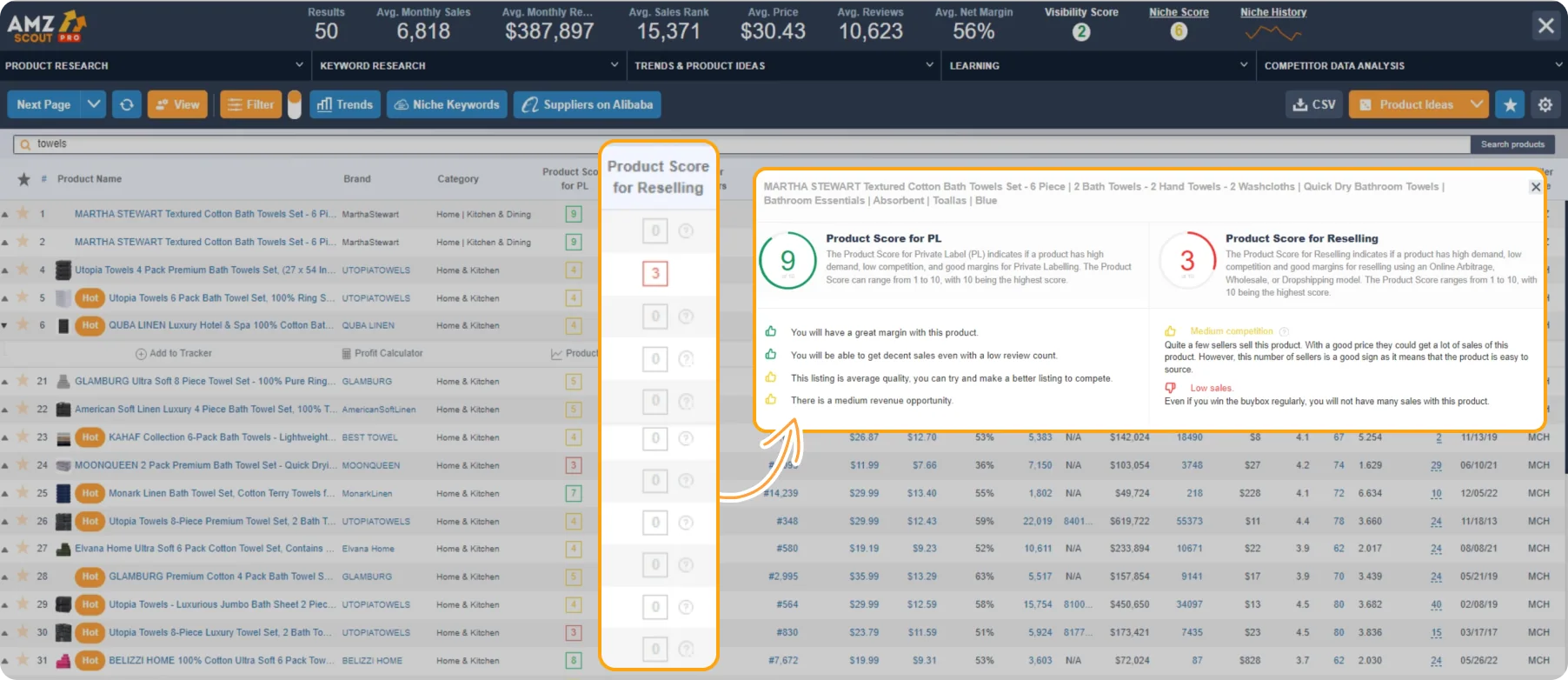
Use the score to frame margin, demand, and competition, then check the underlying numbers before keeping an idea.
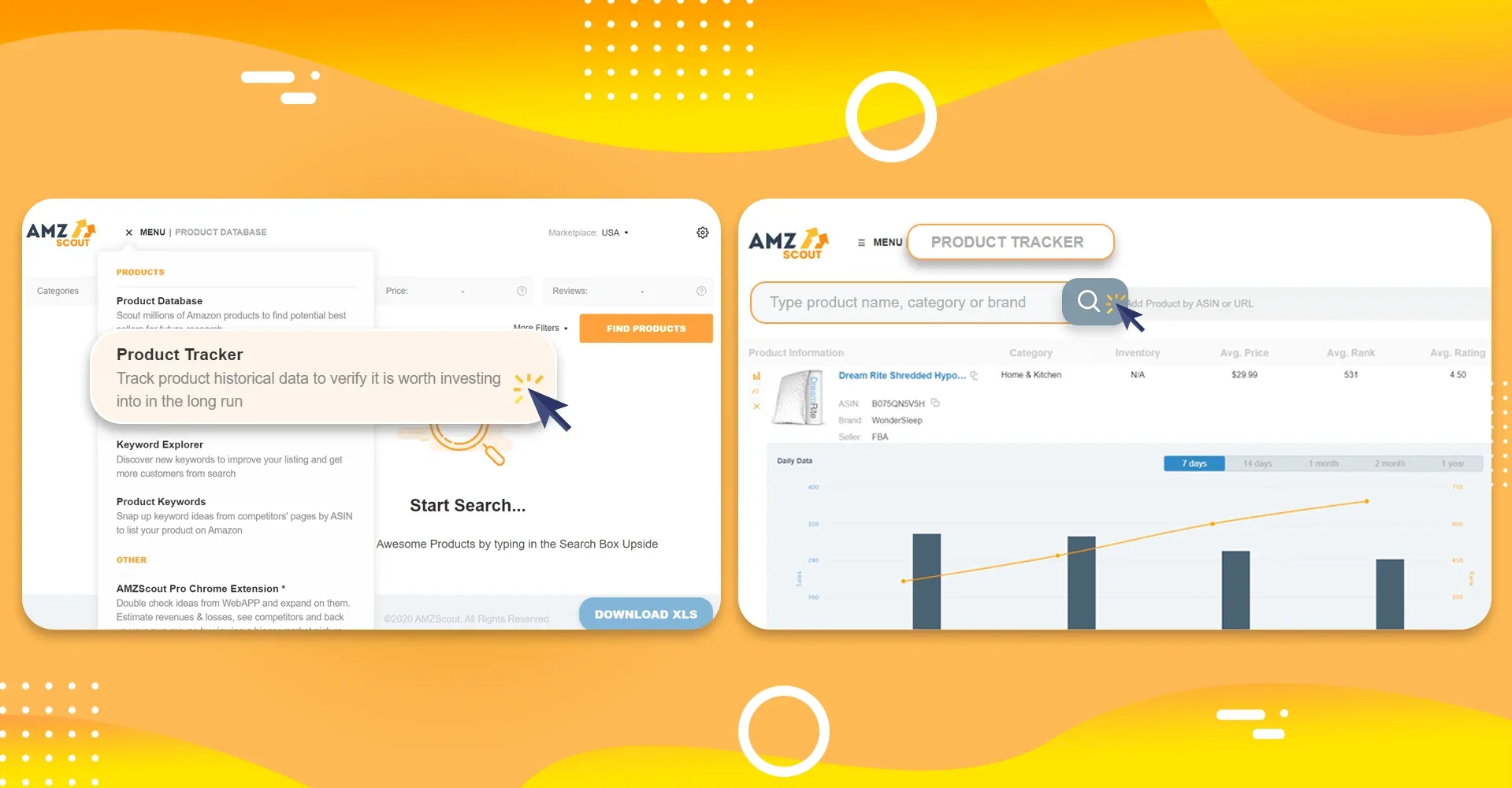
Tracking a product over several days helps separate steady demand from a one-off spike, especially when price or stock changes quickly.
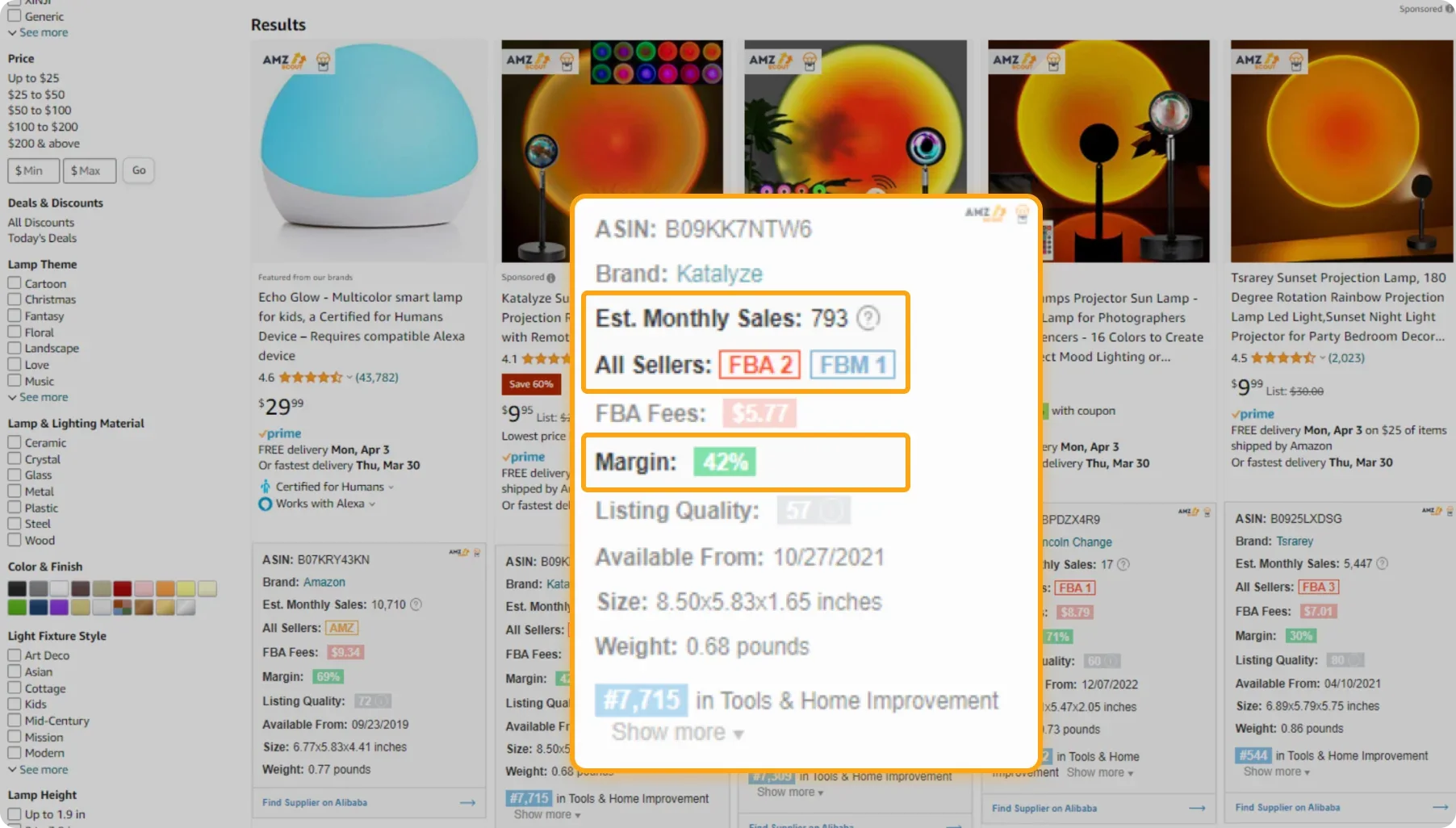
Reading opportunities directly in Amazon results helps spot products worth opening in detail before filling a shortlist.
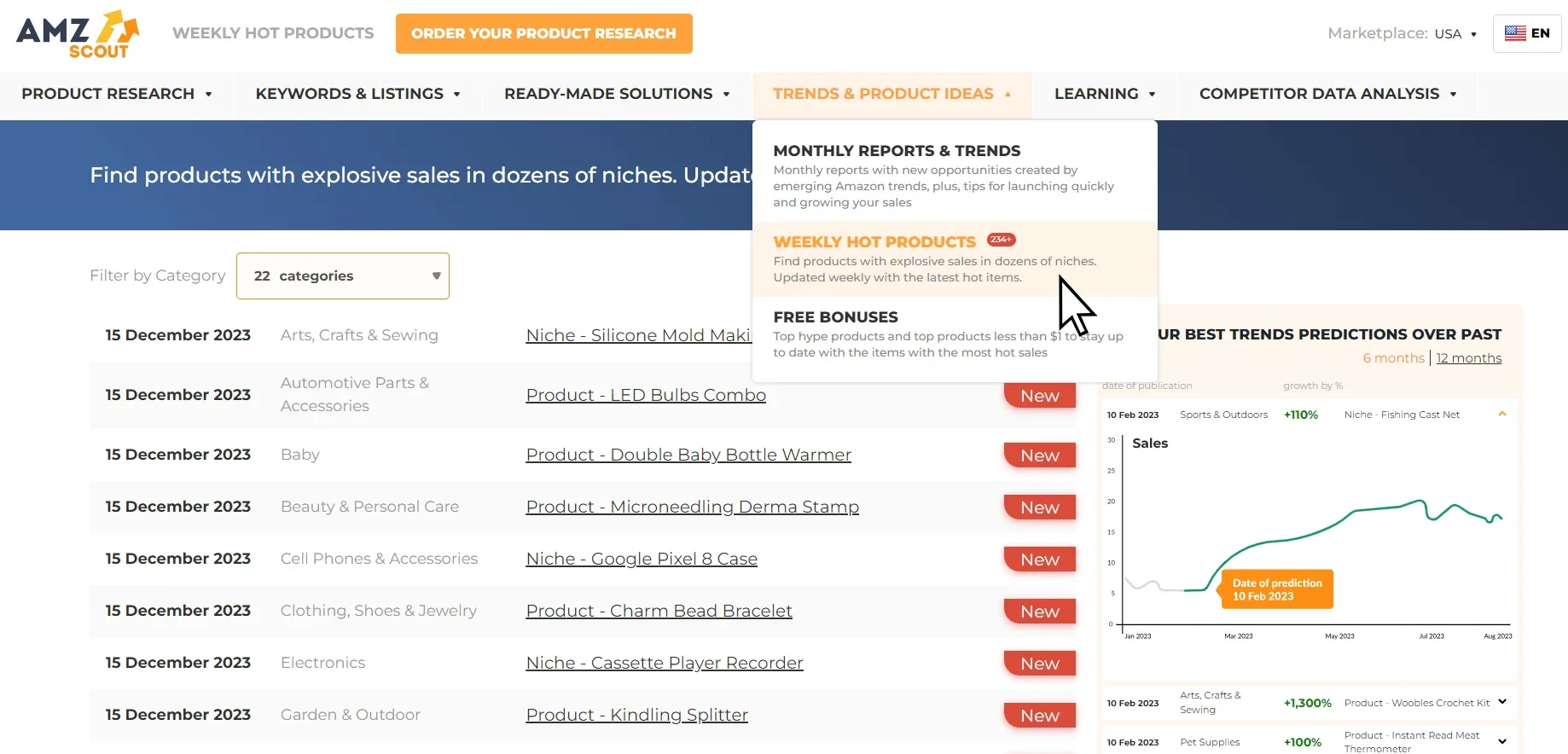
Hot products provide starting points. They still need to be filtered by margin, competition, sourcing, and fit with your positioning.
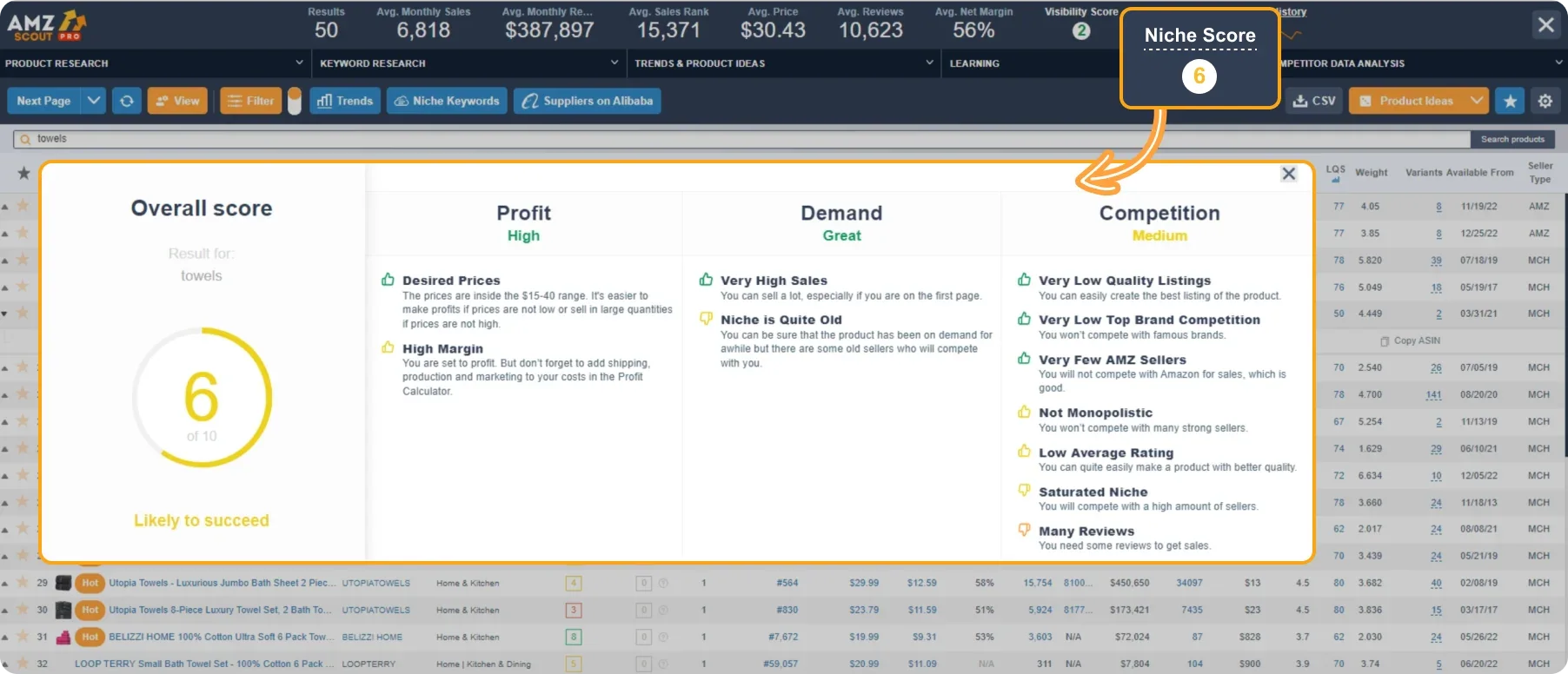
The niche score summarizes demand, profit, and competition. It is a quick marker, then the comparable products need to be checked.
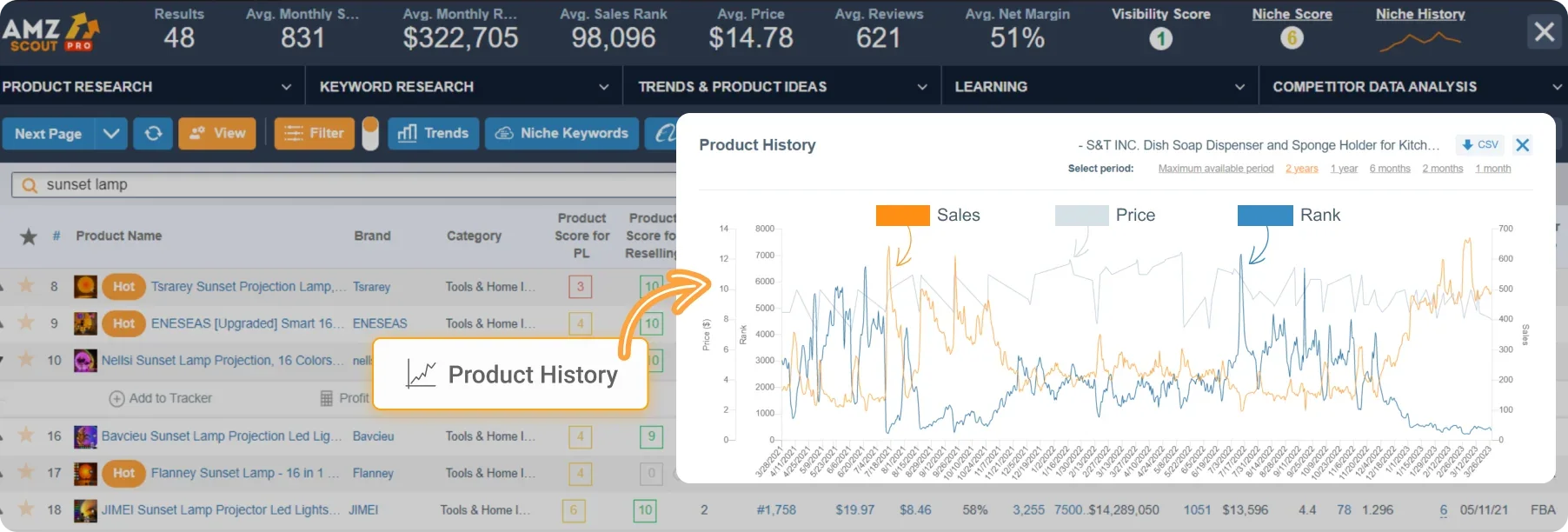
Charts keep decisions from relying on one market snapshot: price, sales, and rank should be read over time.
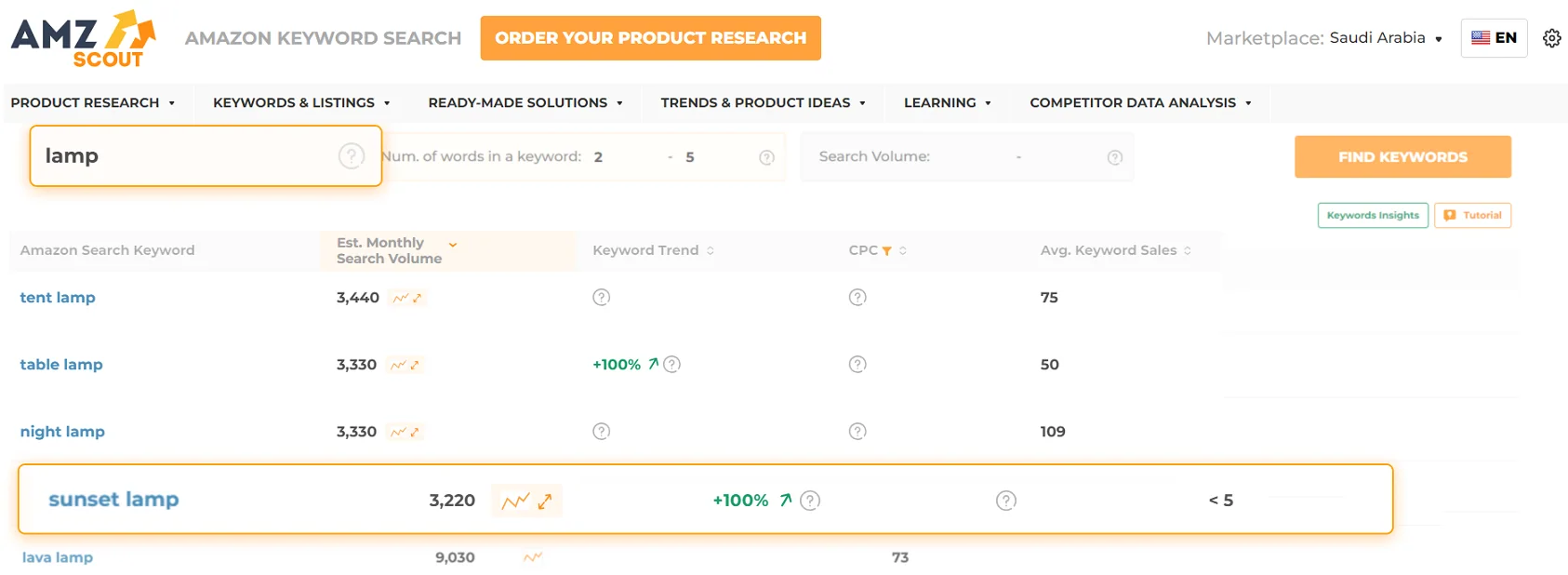
Compare volumes, trends, and sales tied to Amazon search terms before preparing a listing around buyer language.
AMZScout helps decide what to check next
AMZScout becomes useful when you start from clear criteria: category, buying budget, acceptable review level, weight, target margin, seasonality, or sourcing type. The point is not to look at everything, but to reduce noise.
Price, estimated sales, reviews, rank, weight, revenue, and listing quality help avoid vague product ideas.
Offer count, review level, leaders, price, and history give an early view of the effort needed.
Supplier leads are useful only when they match cost, timing, quality, and differentiation.
Where AMZScout can be genuinely useful
AMZScout covers several moments in Amazon research: finding, filtering, comparing, tracking, and preparing a product listing.
Use the product database to start from a category or market criterion, then surface ideas to compare.
Cross-check estimated sales, revenue, reviews, seasonality, and competition to see whether the market still looks reachable.
Look at established products, prices, apparent stock, search terms, and listing quality.
Use search term and listing tools to organize important terms, then check commercial coherence.
Monitor a few products before deciding: one good isolated signal is not enough if the trend degrades.
When an opportunity becomes serious, compare it with SellerAmp or your internal calculations to check margin, fees, and risk.
A simple method for not getting lost in the data
AMZScout can show a lot of information. To stay efficient, every data point should become a useful question: does this product sell, can it be sourced properly, and can it be differentiated?
Define constraints
Choose a category, budget, maximum weight, target price, acceptable review level, and products you already want to avoid.
Filter broadly, then narrow
Start with a broad search, then remove products that are too competitive, fragile, heavy, or seasonal.
Read demand
Compare estimated sales, revenue, search volume, trends, and history instead of stopping at one metric.
Check competition
Look at review count, listing quality, established leaders, and prices to understand the real barrier.
Validate margin
Before keeping an idea, calculate fees, buying cost, likely price, margin, ROI, and price-drop risk.
AMZScout signals to read carefully
A signal is useful when it helps you choose the next step. Alone, it can also create a false feeling of safety.
AMZScout compared with other Rankerfox Amazon tools
AMZScout does not replace SellerAmp or Jungle Scout. It adds another way to find, filter, and track Amazon product ideas before the final decision.
Amazon product research, database, extension, tracking, search terms, sales estimates, and early supplier leads.
Amazon niche analysis, product research, search terms, and market tracking with a very structured reading.
Buying validation: margin, ROI, fees, offers, alerts, risks, and operational decision-making.
Ecommerce and dropshipping product research, stores, suppliers, and traction signals.
Ad monitoring, visible stores, ads, and ecommerce trends outside pure Amazon research.
Which Rankerfox access includes AMZScout?
AMZScout is attached to the Rankerfox Premium plan. It is made for Amazon use cases, product research, marketplace search terms, and niche validation.
Its value is strongest when it complements SellerAmp and Jungle Scout: idea exploration, market reading, tracking, then economic validation.
Continue with Amazon and ecommerce tools
Compare with another approach to Amazon product and niche research.
Check margin, ROI, offers, and risks on a specific Amazon opportunity.
Read product signals from the dropshipping and ecommerce angle.
Review all Premium, SEO, creative, AI, and marketplace tools.
AMZScout with Rankerfox FAQ
Useful points before adding AMZScout to your Premium routine.
Add AMZScout to your Amazon research
Compare Rankerfox plans and use AMZScout with SellerAmp, Jungle Scout, and the other Premium tools to frame marketplace decisions more clearly.
View Rankerfox plans