
Affordable SEO audit: find the real issues without stacking subscriptions
A useful SEO audit is not just a flashy score. It should show what blocks crawling, technical health, content, links, and competitors, then turn those findings into clear priorities.
Rankerfox helps you combine several tools instead of trusting one score. The goal is to understand, sort, fix, and check again.
Why treat SEO audits separately?
Many visitors do not start with a brand name. They want to know how to audit a site, how much it costs, which tools to use, and where to begin. The goal is to connect that practical need with the detailed Rankerfox tool presentations.
A score can reassure or worry you, but it rarely tells you which fix will matter most.
HTTP status codes, redirects, canonicals, robots, depth, speed, and tags need to become simple actions.
A useful audit spots weak pages, editorial opportunities, and assets that deserve improvement.
A technical issue does not carry the same weight on an isolated page as on a page with links or traffic.
A simple method for auditing without getting scattered
An audit becomes more useful when it follows the same order: check access, diagnose technical issues, read pages, compare competitors, then decide.
Step 1
Check crawling
Crawl the site and spot errors, redirects, blocked pages, and deep areas before touching content.
Step 2
Read technical signals
Review tags, canonicals, structured data, performance, visible site links, and URL consistency.
Step 3
Classify pages
Separate pages to keep, merge, enrich, redirect, or remove according to their real role.
Step 4
Compare the market
Check competitors, queries, strong pages, and visibility gaps before choosing fixes.
Step 5
Review links
Read referring domains, anchors, linked pages, and trust signals so decisions are not isolated.
Step 6
Create an action list
Turn the audit into a short sequence: quick fixes, important projects, and checks to repeat later.
Rankerfox tools that help with SEO audits
Each tool brings a different layer. A good audit combines several readings without mixing up diagnosis, decision, and execution.

Site audits, tracking, reporting, rankings, backlinks, and competitor reading.

Readable website review, checklist, reports, tracking, and client presentation.

Audit score, report, tasks, tracking, and a summary that is easy to share.

Broad view across technical health, queries, competitors, content, rankings, and opportunities.

Backlinks, strong pages, anchors, referring domains, and competing content.

Trust Flow, Citation Flow, link topics, and faster domain qualification.
Visuals that make the audit concrete
SEO audits are easier to understand when crawl, reporting, and prioritization screens are visible. These visuals are public or already used inside Rankerfox tool pages.
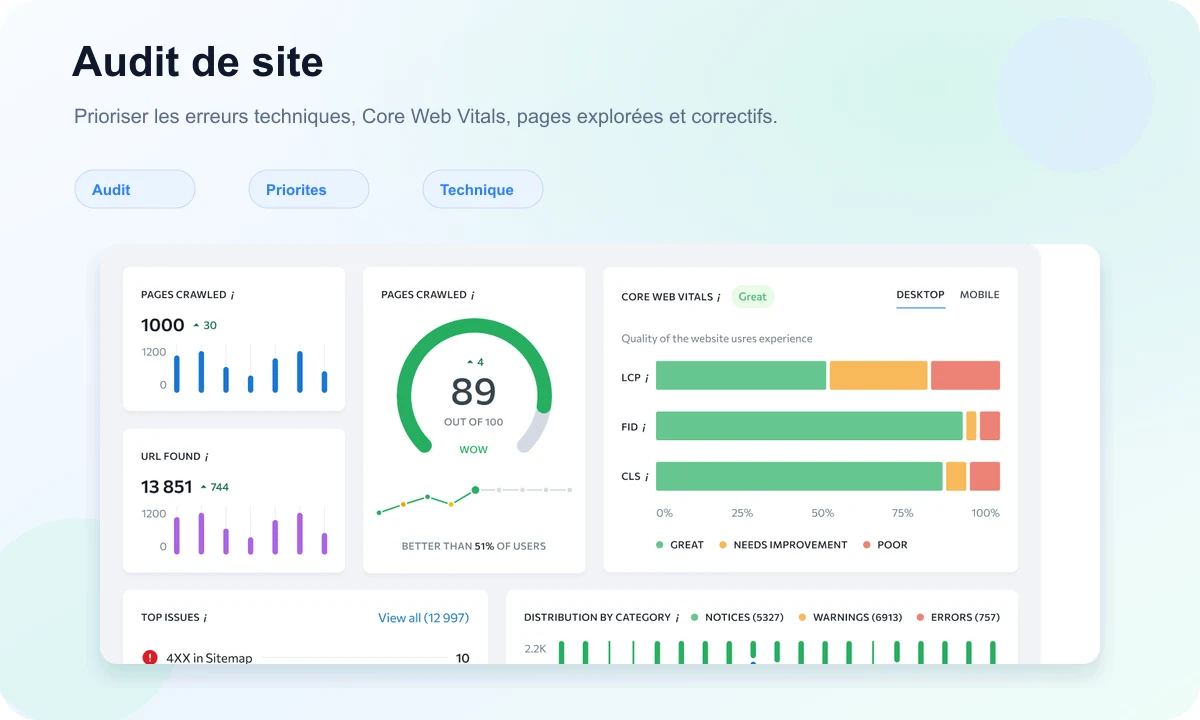
Read issues by severity and avoid treating every point as equally important.
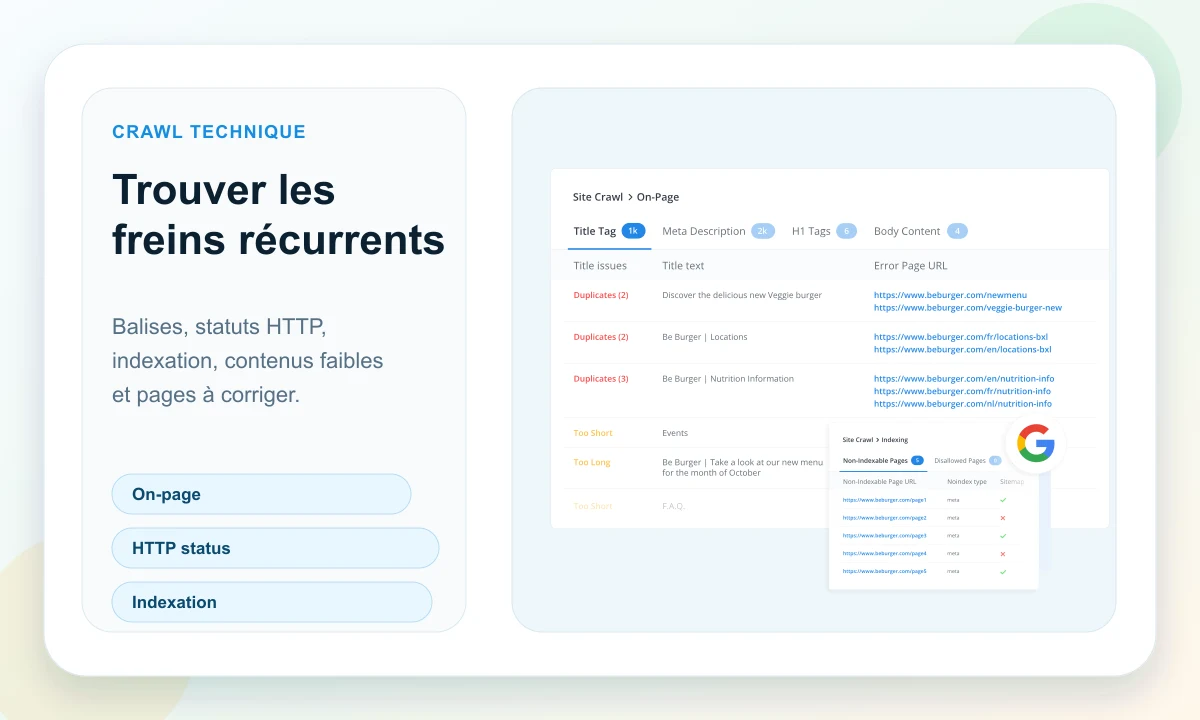
Turn a technical diagnosis into a report a team or client can understand.
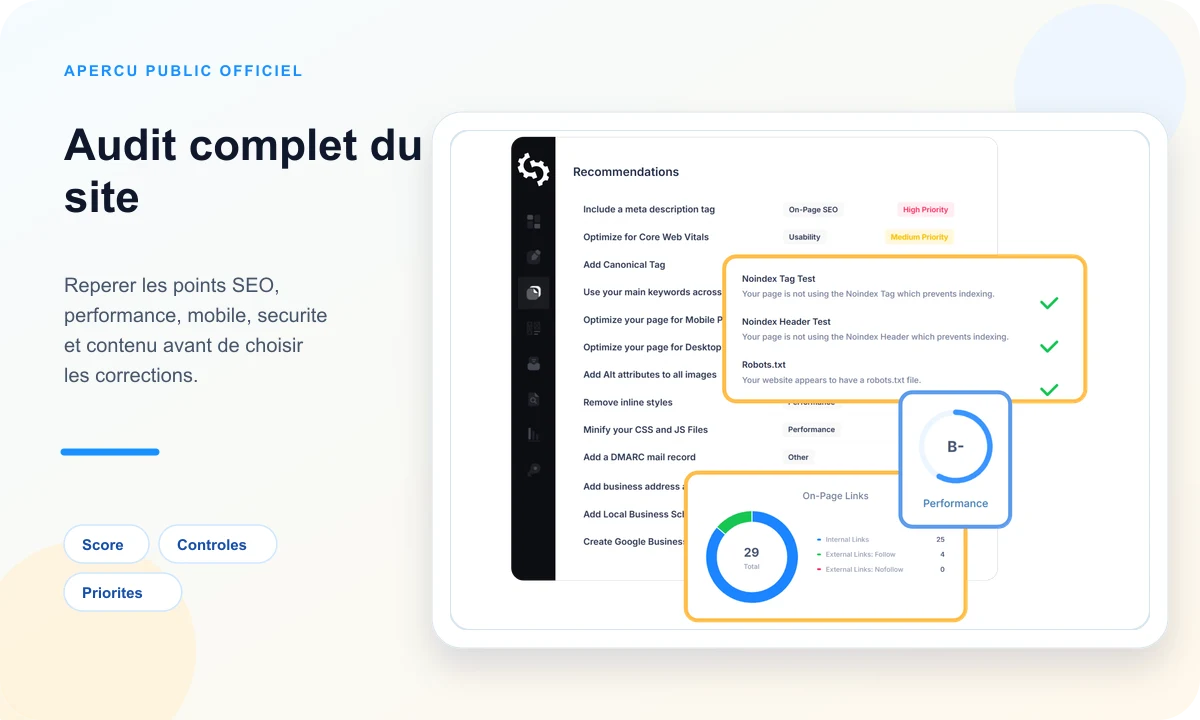
Summarize fixes, scores, and tasks without losing the nuance of the diagnosis.
Three situations where an affordable SEO audit can move things forward
Identify important pages, redirects to prepare, and errors to avoid before changing structure.
Compare technical health, content, links, and competitors before blaming one cause too quickly.
Replace a confusing long list with a few measurable actions and follow-up checks.
Continue after the audit
Review the main SEO tool families available with Rankerfox.
Choose the queries and questions to work on after diagnosing the site.
Read referring domains, anchors, quality, and competitors before acting.
Qualify off-page opportunities after diagnosing the link profile.
Review a domain's risk and potential before buying or redirecting.
Connect auditing, queries, competitors, and rank tracking.
Compare plans before building a regular audit routine.
Affordable SEO audit FAQ
Useful answers before running an audit with the tools available in Rankerfox.
Build a clearer SEO audit with Rankerfox
Compare pricing, choose the right access level, and use Rankerfox SEO tools to move from scattered diagnostics to a real priority list.
View pricing