

SeObserver with Rankerfox
Use SeObserver inside the Rankerfox Premium plan to read SERPs, follow rankings, connect backlink movement, and understand faster what competitors are doing on the queries that matter.
Plan
SeObserver belongs to the advanced SEO tools available in the Rankerfox Premium plan.
Family
SERPs, rankings, competitors, backlinks, offsite signals, and reading filters.
Routine
Connect a Google movement to a concrete hypothesis before deciding what to check.
A tool for reading SEO with context around it
SeObserver becomes valuable when a ranking change is not enough to decide. A position rises, a page drops, a competitor appears, a link arrives, a title changes: the useful part is connecting those signals instead of reading them in separate tables.
Go back through Google results to see who was present, who disappeared, and which domains hold positions over time.
Compare changes for a site and its competitors across the queries that really structure the market.
Spot recently found links, anchors, source domains, and target pages worth watching.
Use filters to separate useful links, weak signals, and data that only makes the analysis harder to read.
Prioritize topics to monitor with volume, value, competition, and real interest for the project.
Read CMS markers, page types, and visible clues in link profiles to refine an SEO hypothesis.
The SeObserver screens to use first
SeObserver is especially useful for people who want to understand why a SERP moves. These visuals show the blocks that connect best with a concrete Rankerfox routine.
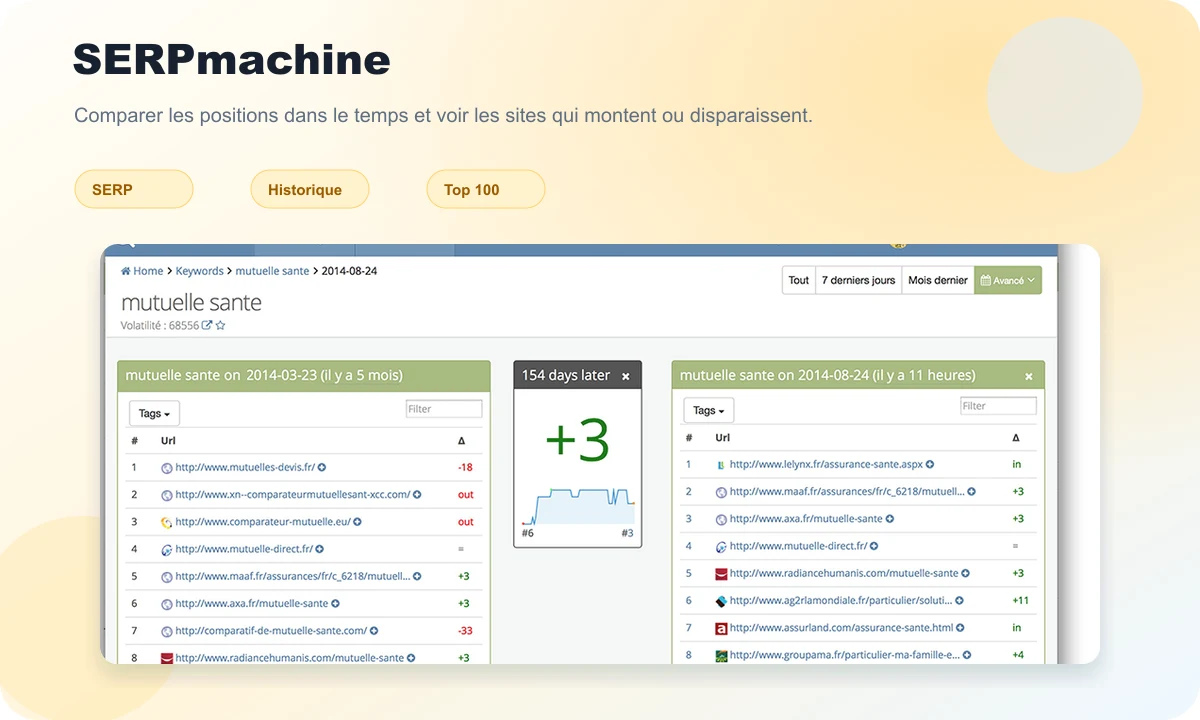
History helps tell whether a position is an accident, a trend, or a lasting change. That matters before drawing a quick conclusion from a rise or drop.
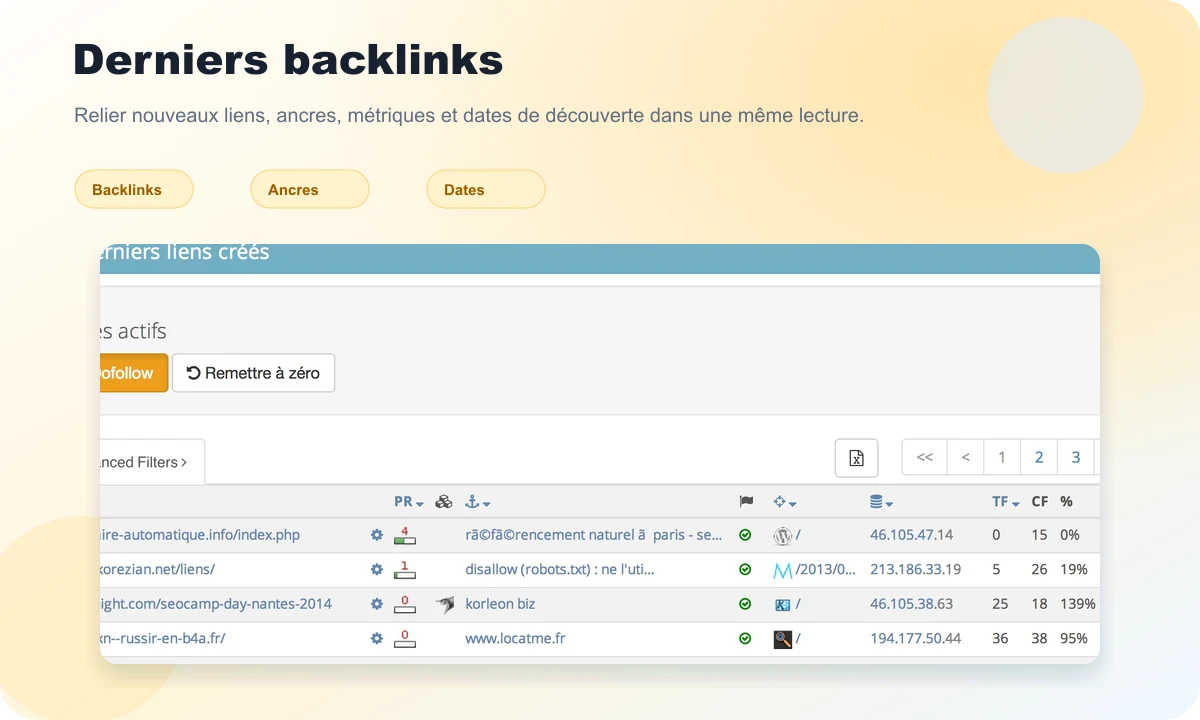
Recent links help check which link placements, anchors, and target pages appear around a visible movement.
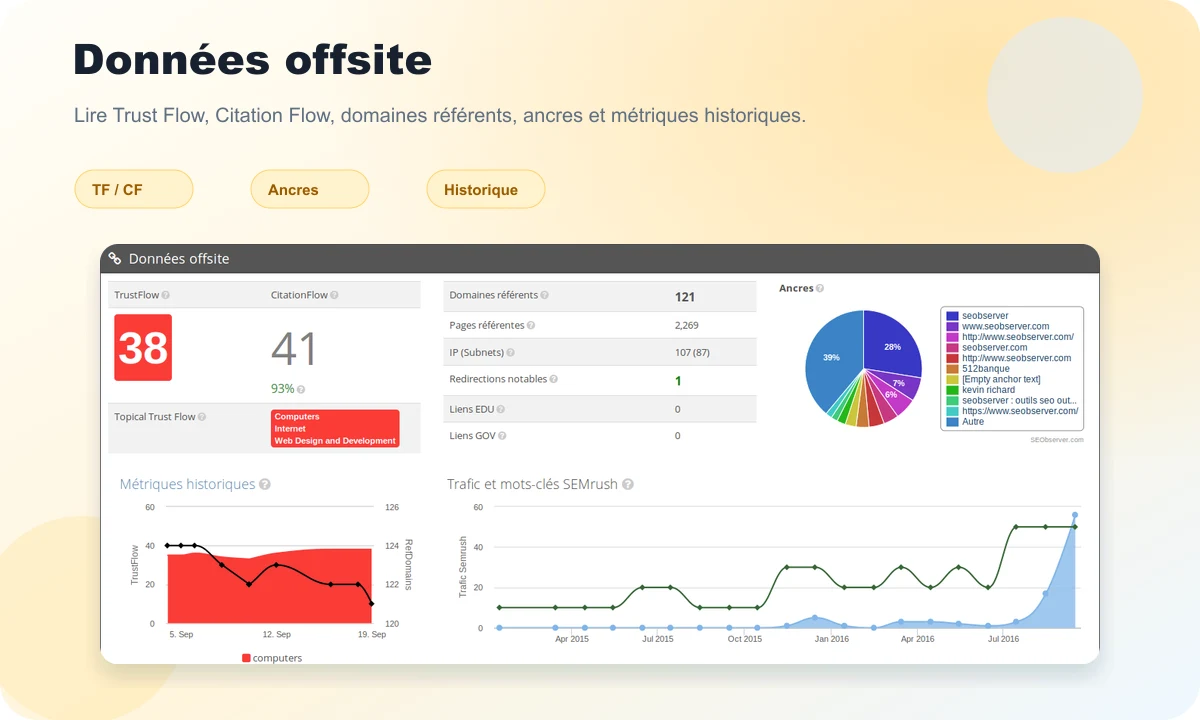
Offsite data helps separate volume, quality, diversity, and risk signals. The goal is not to count more, but to understand better.
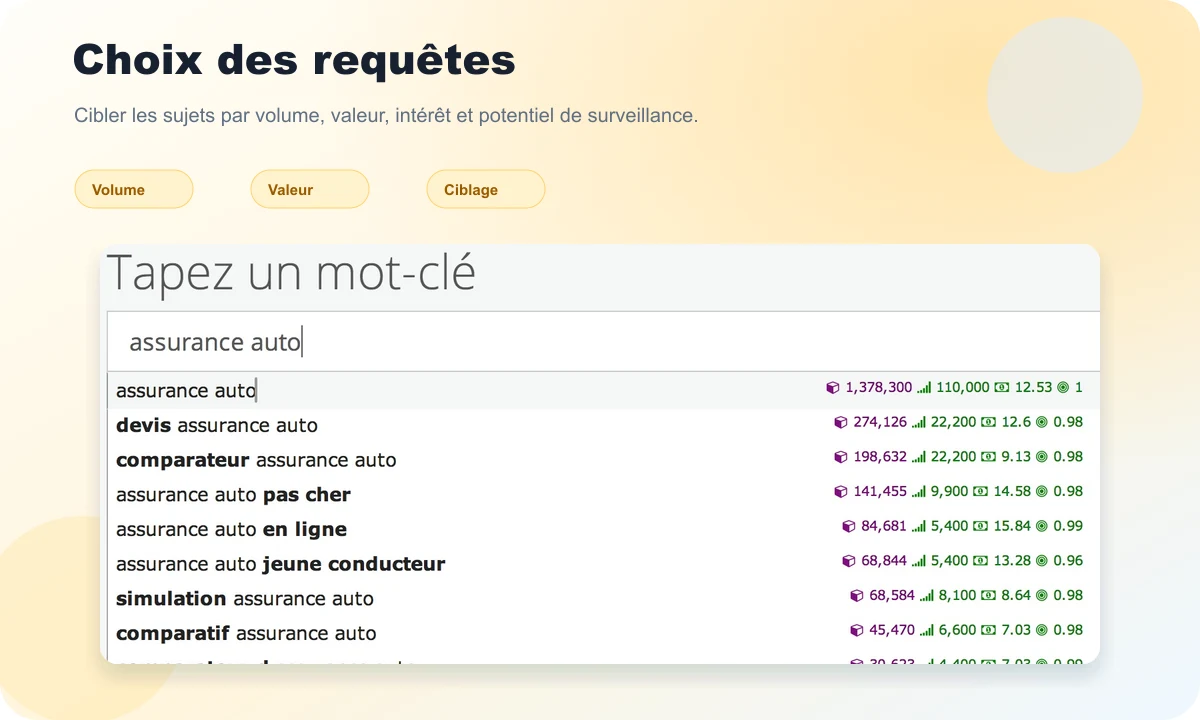
Clean monitoring starts with the queries worth watching. SeObserver helps choose what deserves attention instead of scattering the analysis.
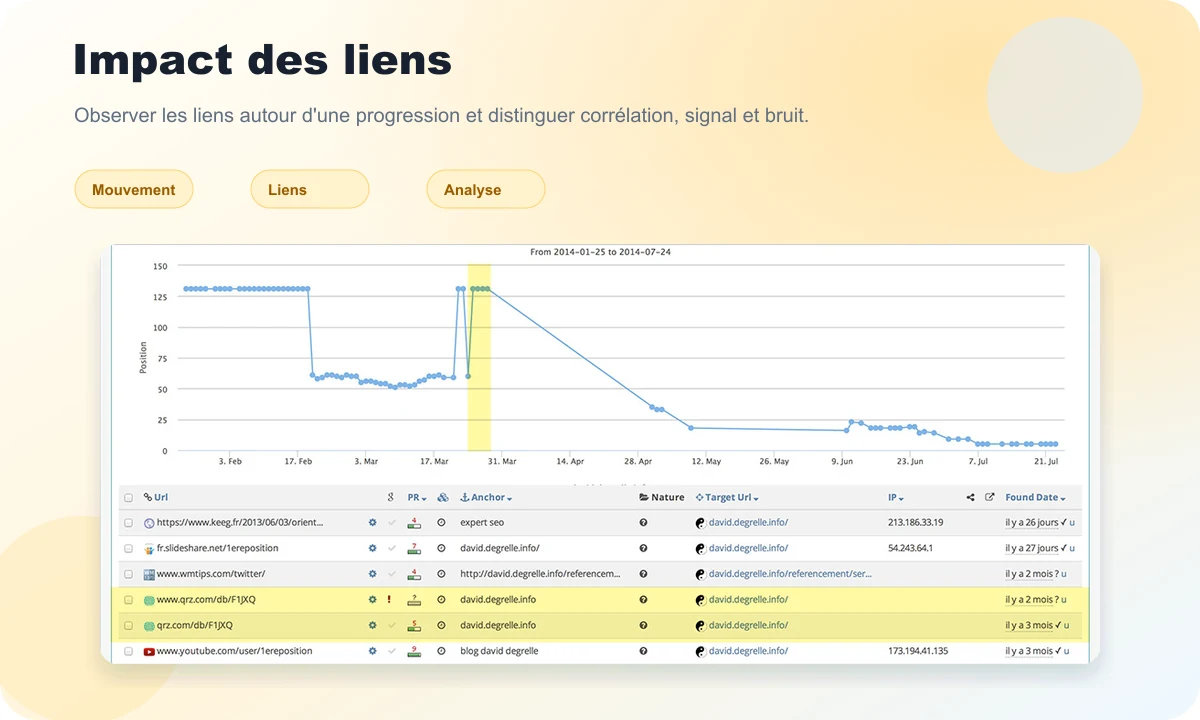
Comparing rankings and links helps form a hypothesis. The context still needs checking, because one link alone does not always explain a movement.
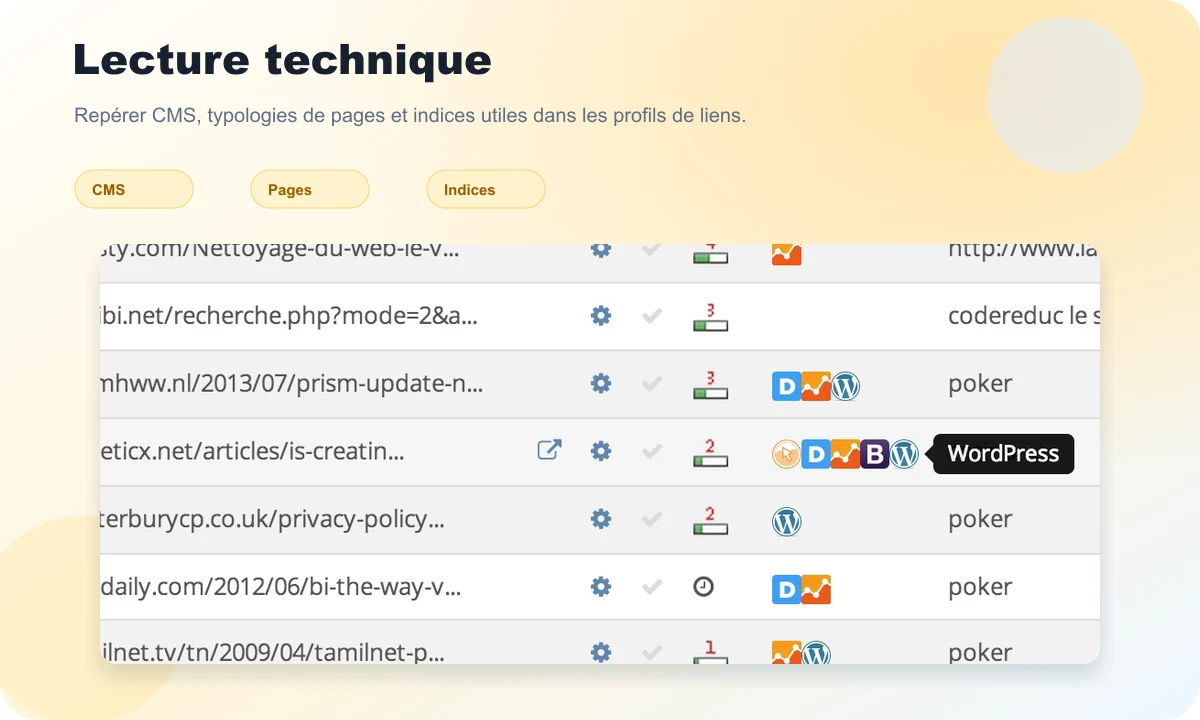
Icons and page types add a faster reading layer when comparing several link sources or competitors.
Where SeObserver really makes sense
SeObserver becomes more valuable when it answers a clear question, especially in markets where competitors move quickly.
When a page gains or loses several positions, SeObserver helps check what changed around the SERP and the offsite profile.
- Which competitors moved at the same time?
- Did the SERP composition change?
- Do links or visible changes coincide with the movement?
On some topics, a domain can rise quickly. Reading rankings, backlinks, and pages together helps understand what it is testing.
- Which pages gained the most visibility?
- Which types of links appear repeatedly?
- Does the gain look temporary or established?
Before copying a competitor approach, it is better to separate useful links from weak or noisy signals.
- Which domains bring real topical context?
- Which anchors look natural or too repetitive?
- Which links deserve manual verification?
SeObserver is particularly readable for following French-market SERPs and competitors without restarting from scratch every week.
- Which queries should be monitored first?
- Which domains appear across several topics?
- Which alerts deserve quick action?
A five-signal routine to keep the thread
The best way to use SeObserver is to start from the Google result, then move toward the signals that can explain the movement.
Observe the SERP
Spot who rises, who leaves, who stays stable, and where the change truly matters.
Compare history
Read positions before and after the move to avoid confusing a lasting trend with a temporary variation.
Check links
Review recent links, anchors, and target pages around competitors or the observed site.
Filter noise
Set aside low-value elements and focus on the signals that deserve a real check.
Decide what comes next
Choose between monitoring, fixing, strengthening a page, analyzing a competitor, or documenting a link lead.
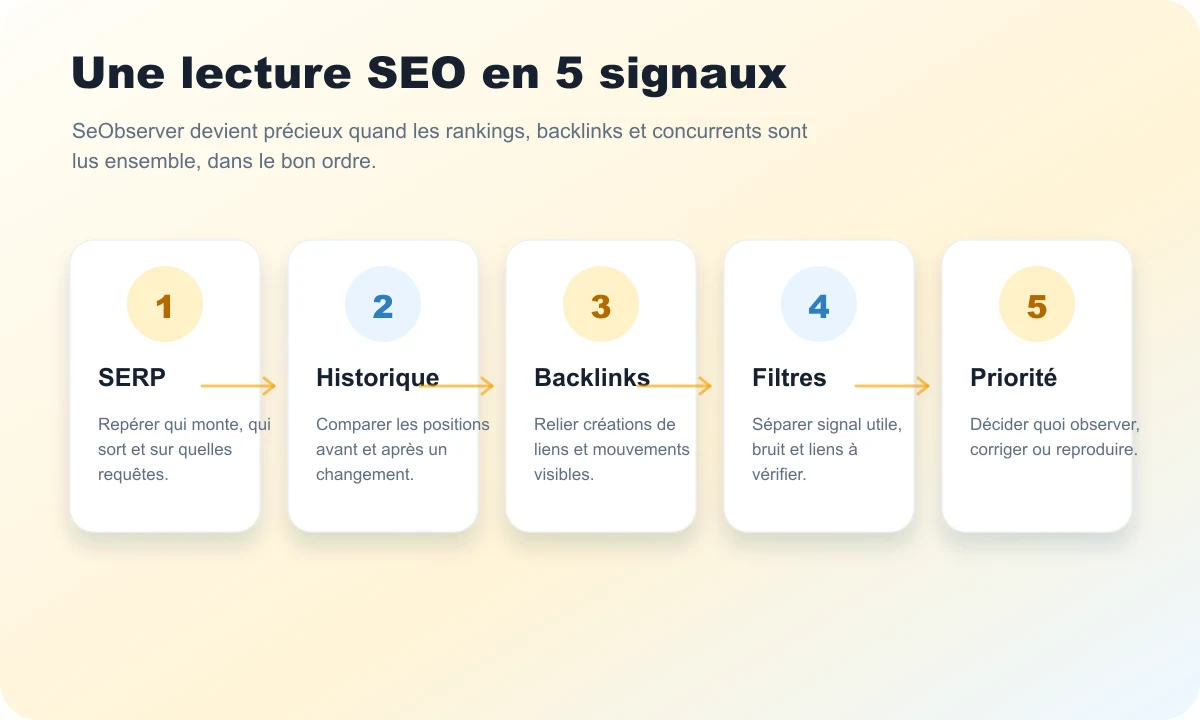
Turn an observation into an action
SeObserver gives a lot of material. The important part is connecting each reading to a simple decision.
Did the SERP change?
History shows entries, exits, and domains that remain visible over time.
Compare stable pages and new entrants before changing the site.
Is a competitor rising fast?
Curves, backlinks, and target pages help read what comes with the progression.
Separate signals you can learn from and signals that only require monitoring.
Is the link profile readable?
Anchors, sources, metrics, and filters help separate usable signal from noise.
Build a shortlist of links or domains to verify manually.
Which query should be watched next?
Targeting by volume, value, and interest helps choose topics to monitor.
Add priority queries to the routine instead of tracking the whole market.
How it fits among Rankerfox SEO tools
SeObserver does not play exactly the same role as all-in-one SEO suites. It is especially interesting when the goal is to understand a SERP, a competitor, or a link signal.
SE Ranking works well for project tracking, audits, reporting, and an all-in-one SEO view.
SeObserver brings a sharper reading of SERP movement, history, and offsite signals.
Sistrix gives a clear view of Google visibility, directories, and competitor evolution.
SeObserver complements it with a closer look at SERPs, recent backlinks, and movement clues.
Semrush remains powerful for domain analysis, SEO/SEA opportunities, and broad competitive data.
SeObserver is the better fit when you want to dig into one result and connect SERPs, rankings, and links.
Ahrefs remains a reference for exploring link profiles, top pages, and competitor domains.
SeObserver adds a time-based and SERP-based reading that helps connect links with visible movements.
Which Rankerfox plan includes SeObserver?
The 1€ trial over 7 days mainly helps validate access, the interface, and your usage rhythm before choosing a plan.
Standard already covers several SEO needs, but SeObserver is presented here as a Premium plan tool.
SeObserver belongs to the Rankerfox Premium plan, alongside advanced tools for visibility, competitors, and offsite signals.
Pages to read around SeObserver
Connect recent backlinks, anchors, referring domains, and visibility movement.
Compare it with a broader SEO suite for tracking, audits, and reporting.
Complete the view on Google visibility and competitors.
Position SeObserver against a general SEO reference.
Compare Trial, Standard, and Premium before choosing.
Frequently asked questions about SeObserver with Rankerfox
Useful points to clarify before adding SeObserver to your SEO routine.
Add SeObserver to a Premium SEO routine
Compare Rankerfox plans, check the access that matches your usage, then use SeObserver to understand SEO movement before deciding what to strengthen.
Compare plans