
Buying Backlinks in 2026: Prices, Platforms, Checks and Risks
How much backlinks cost, how platforms, comparison tools and bulk services differ, what to check before paying, and how to build a controlled link acquisition budget.
The short answer
A backlink may cost a few euros or several hundred. The real price depends on the publishing website, the exact page, the writing, placement duration, topical fit, and the data available to assess the opportunity.
For a first purchase, a small and carefully checked selection is usually more useful than a large order driven only by a low unit price.
Disclosure: some links to Linkuma, AccessLink, and LinkFinder are affiliate links. These services are external and are not included with Rankerfox. The partner's displayed price does not increase for you.
If you are new to the topic, start with our guide to what a backlink is, how anchor text works, and what makes a useful source.
How much does a backlink cost in 2026?
There is no universal market rate. Two links sold at the same price may have completely different value: one can sit inside a useful article closely related to your topic, while the other appears on a page with no visibility and dozens of unrelated outgoing links.
Public prices checked on July 29, 2026 provide a few concrete reference points:
| Solution | Observed public price | What you are buying | What to check |
|---|---|---|---|
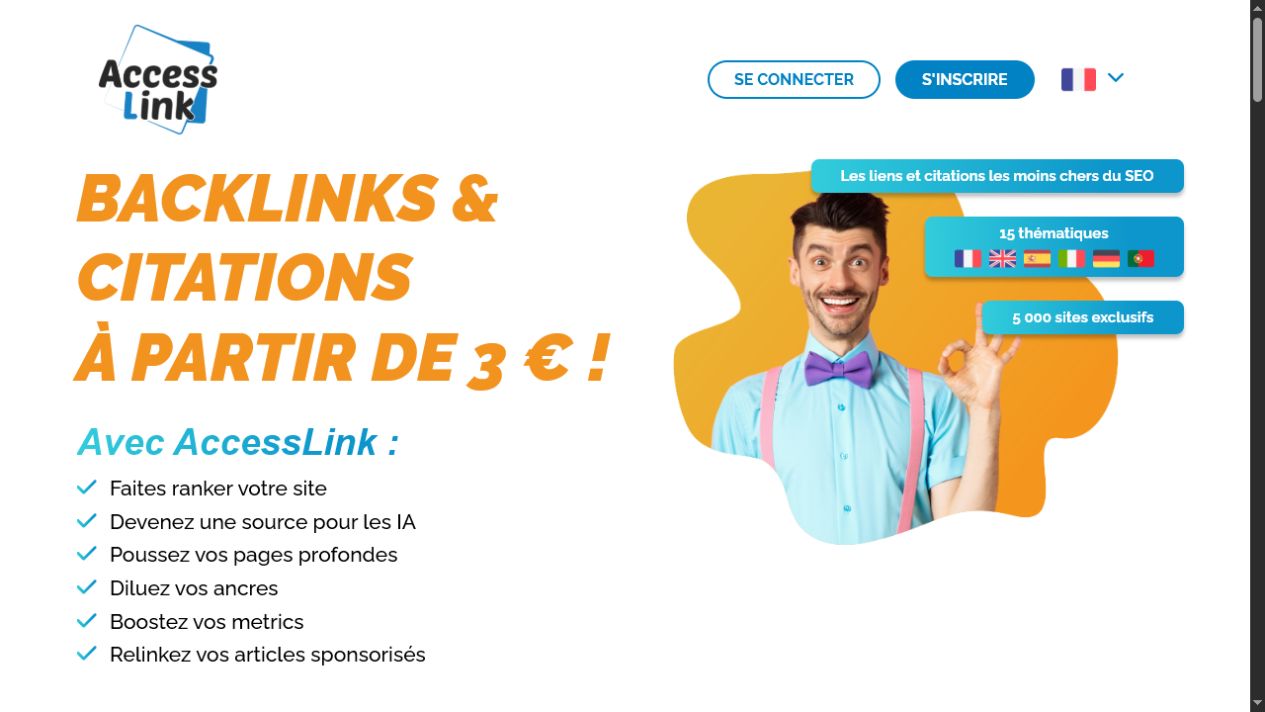
| AccessLink | Clearance links from €3, Classic from €6.50, Premium from €20 | Existing-page placements, general or topical publications, and higher-data offers depending on the tier | Page type, available anchor, metrics, and indexing terms |
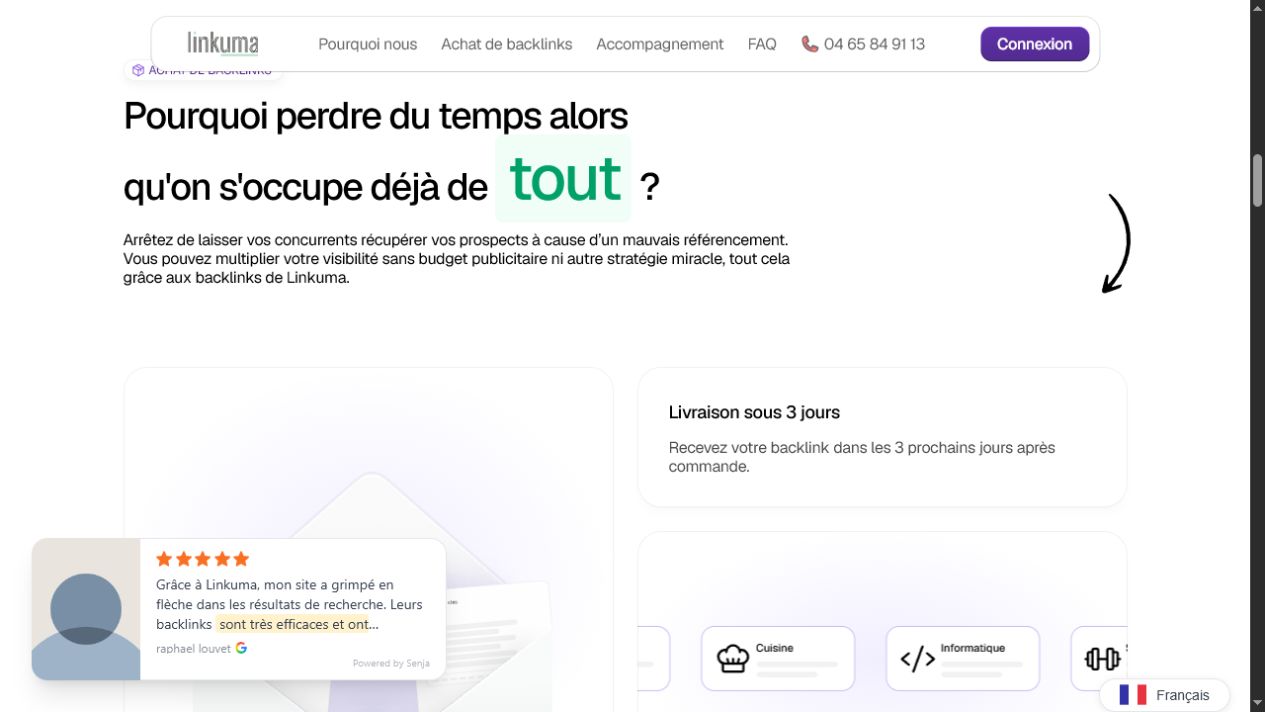
| Linkuma | Publications at €7, €10, €30 and above in its terms | Publication and support that vary with the selected offer | Topic, turnaround, duration, writing, and the service included |
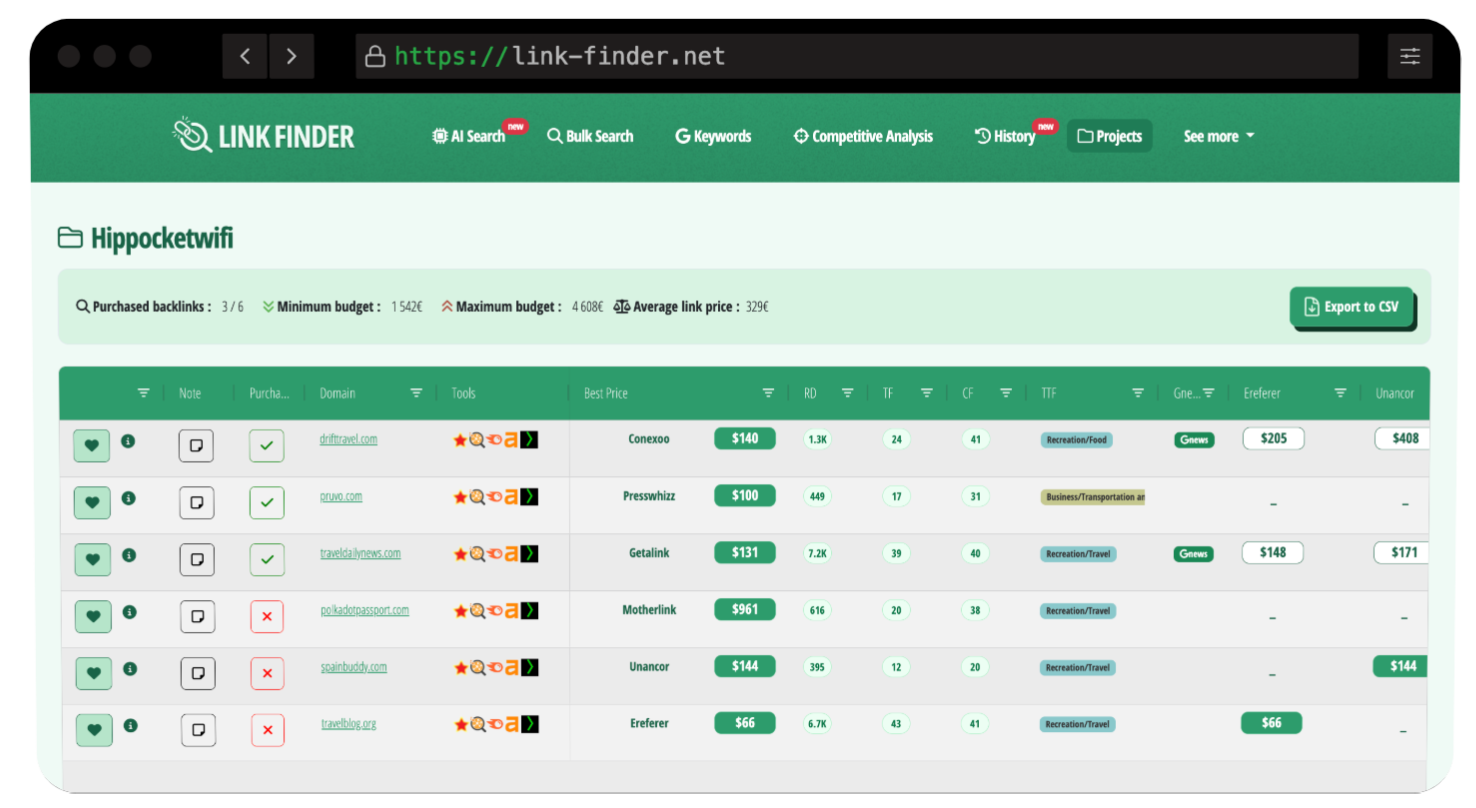
| LinkFinder | Subscriptions displayed from €39 to €150 per month | Research, price comparison, and monitoring software, not the backlink itself | Useful search volume, covered marketplaces, and actual savings |
Prices can change, and tax presentation is not always identical across platforms. Check the final amount together with everything included: writing, website selection, temporary homepage visibility, commercial guarantees, replacement terms, and access to metrics.
What the price should actually cover
Buying a backlink is not simply paying for a URL inside an article. You are paying for a set of characteristics that should make sense for the page you want to support.
- The publishing website: topic, history, visibility, and overall editorial quality.
- The page: a new article, an insertion into an existing page, a ranking page, or a simple citation.
- The writing: length, customization, approval process, and how naturally the link is introduced.
- The placement: surrounding context, position on the page, other outgoing links, and stated duration.
- The available data: estimated traffic, ranking terms, referring domains, history, and combined metrics.
- The monitoring: presence checks, indexing, replacement, support, and multi-project management.
A low-cost link may be appropriate for diversification or a secondary page. A key commercial page generally deserves stricter selection, even if that means buying fewer placements.
Three external solutions with different roles
Linkuma, AccessLink, and LinkFinder do not solve the exact same problem. Treating all three as identical backlink vendors would be misleading.
To compare them with Linkavista, Semjuice, Soumettre.fr, and NextLevel, read our link building platform comparison, organized by budget, autonomy, and support level.

Linkuma: a guided starting point
The platform highlights several publication tiers, topical websites, and support. It suits buyers who do not want to build the entire selection process alone.
AccessLink: test low-cost formats
Its public range runs from clearance placements to Premium publications. It can fit a tight budget when each format and publishing page is checked carefully.

LinkFinder: compare before buying
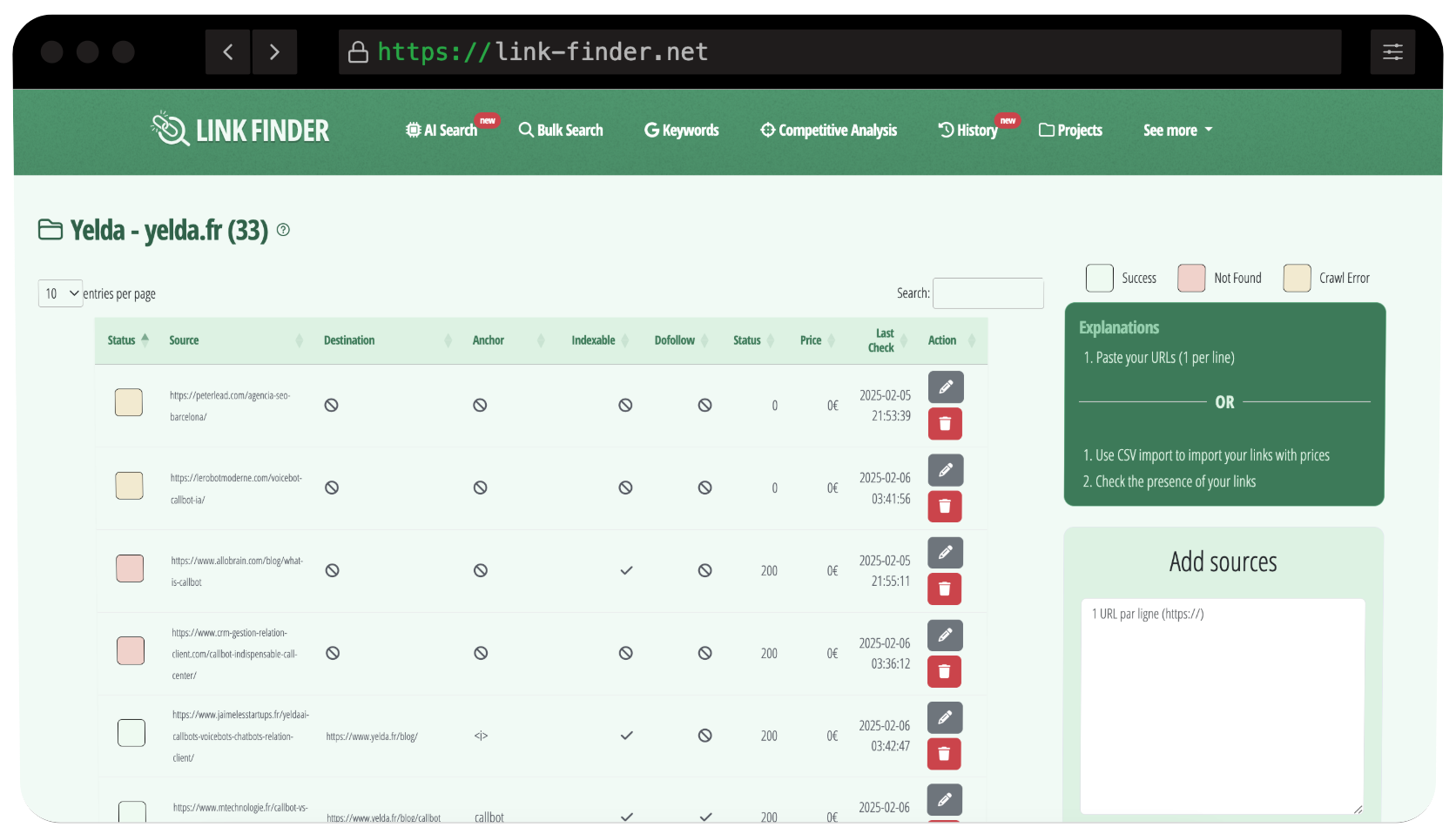
LinkFinder searches opportunities across marketplaces, compares prices, and monitors selected links. It does not sell the publications itself.
Buying low-cost backlink bundles on ComeUp
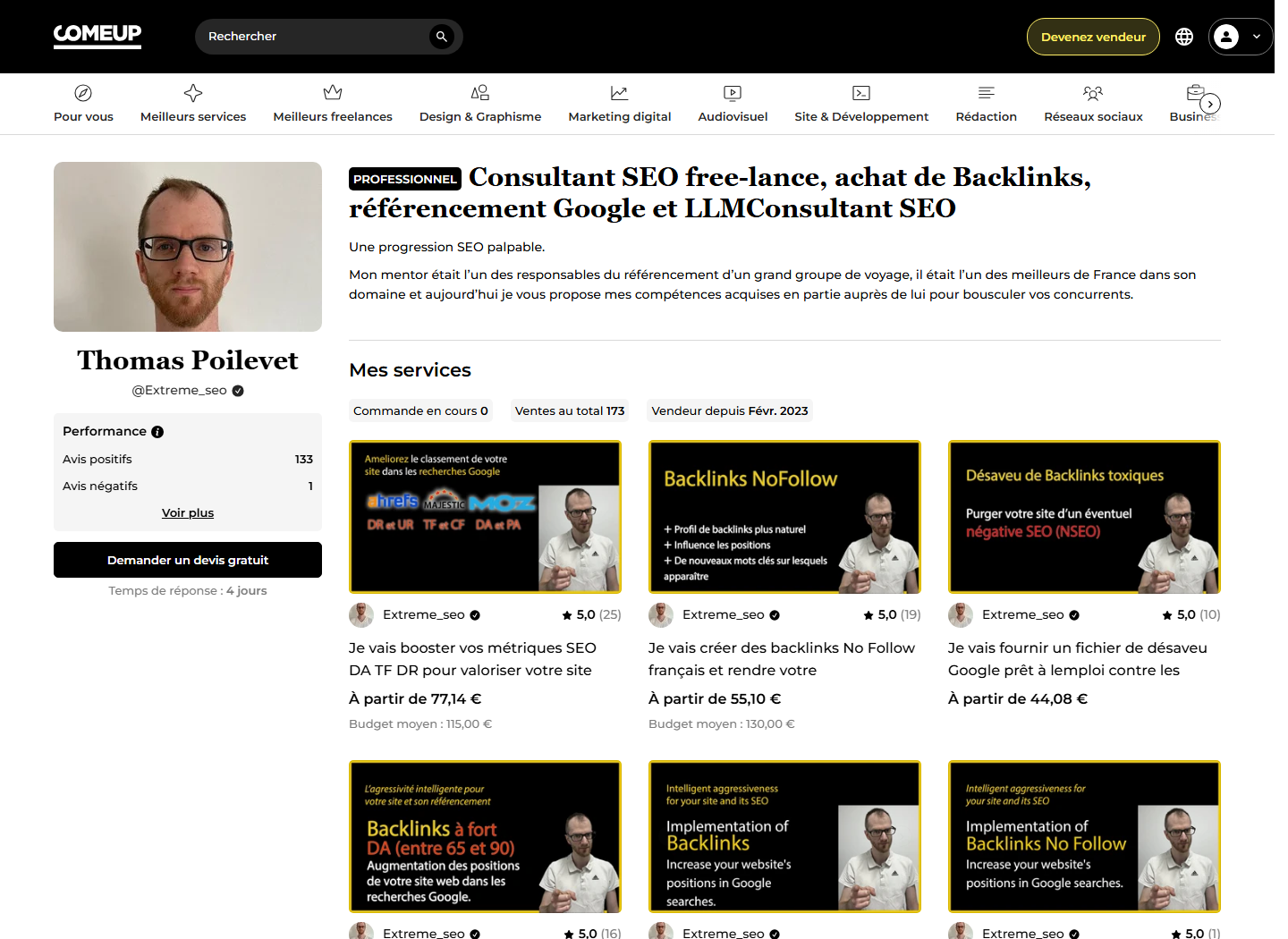
A freelance marketplace solves a different problem: the seller creates and delivers a defined bundle, while the buyer gives up some of the page-by-page selection available in a placement catalog. This route can make sense when a clear volume, turnaround, and delivery report matter more than manually choosing every source.
When checked on August 2, 2026, the Extreme SEO profile publicly offered bundles of 50 to 300 French nofollow backlinks, batches of 10 links advertised with high DA, image backlinks, and several English-language variants. The profile displayed 173 total sales and 133 positive reviews. These figures provide commercial context, but they do not replace a review of the actual delivery format.
French nofollow bundles
The 50, 100, and 300-link offers focus on volume and source diversity. Ask which formats are used and whether some links are comments that may move to later pagination.
High-DA batches
DA is a third-party filtering metric, not a Google score. Review topical fit, current visibility, the exact page, outgoing links, and domain history as well.
Image links and international offers
These formats may diversify sources or support an English-language website. Check the destination, link attribute, alt text, page language, and stated duration.
Before ordering a bundle, define target pages, allowed anchors, domain distribution, language, expected attributes, and the final report format. High volume does not compensate for unrelated sources, and no backlink count guarantees a ranking.
Explore Extreme SEO services
Review the currently displayed volumes, turnaround times, ratings, and terms, then compare them with your own criteria before ordering.
Which approach fits your situation?
| Your situation | Practical approach | Main check |
|---|---|---|
| First test below €50 | A small AccessLink order or an entry-level Linkuma offer | A low price does not remove the need to inspect the placement |
| Guided campaign | Linkuma for a clearer framework and support | Approve target pages and anchor choices before launch |
| Regular buying across marketplaces | LinkFinder for availability and price comparison | The subscription should save more than it costs |
| A delivered bundle without selecting every source | A specialist seller on a freelance marketplace | Clarify link formats, domains, anchors, and presence terms before ordering |
| Important commercial page | Fewer placements with stronger checks on context and page quality | Avoid repetitive anchors and unrelated websites |
| Publisher selling placements | A separate publisher workflow through a marketplace such as Linkavista | This is different from buying links for your own websites |
If you manage your own websites and want to monetize sponsored publishing, our guide explains how to sell backlinks on your website, review requests, and protect editorial consistency.
Checks to perform before paying
Ten minutes of review can prevent a wasted purchase. Inspect the exact page whenever possible instead of relying on a single domain score.
- Topical fit: does the website and page genuinely relate to your market?
- Indexability: is the page accessible, indexable, and already known to search engines?
- Visibility: does the domain still have pages with estimated organic traffic?
- History: did the topic, apparent ownership, or publishing volume change abruptly?
- Outgoing links: does the website publish links to many unrelated industries?
- Context: does the text around the link help the reader?
- Anchor: does it look natural next to the anchors already present in your profile?
- Duration and remedy: what happens if the page disappears, remains unindexed, or removes the link?
Use our affordable backlink analysis guide and link building tools overview to prepare those checks.
Understand the risks without overreacting
Google includes buying or selling links for ranking manipulation in its link spam policy. The same documentation explains that advertising and sponsorship links are part of the web economy when they are qualified with rel="sponsored" or rel="nofollow".
The most common practical failures are often simpler: a page that is never indexed, a website losing visibility, a removed article, an aggressive anchor, a placement sold across unrelated industries, or money spent on a weak target page.
No seller can guarantee a Google position. An indexing, replacement, or presence guarantee is a commercial condition; it does not prove that the link will create measurable growth.
Read the official Google Search spam policies before choosing your own risk level.
Build a budget instead of buying randomly
A useful budget starts with one page and one clear objective. Spending €100 on ten arbitrary links is not automatically better than selecting two or three pages that fit the topic and the existing profile.
Test budget
Use a non-critical page, vary formats, and check delivery, indexing, and presence after several weeks.
Recurring budget
Spread purchases over time, keep an anchor record, and compare each new source with the existing backlink profile.
Priority page
Spend more time on the publishing page, editorial context, and how the new link complements existing sources.
Before ordering, a competitor backlink analysis can reveal the page and domain patterns that already recur in your market.
Where Rankerfox fits
Rankerfox does not sell the backlinks discussed in this guide. Its role comes before and after the purchase: use tools such as Ahrefs, Majestic, or Semrush to compare domains, review anchors, detect new links, and spot losses.
External platforms help find or order placements. Tools available through Rankerfox provide more data for the decision and help verify what was actually delivered.
Agencies can continue with Rankerfox for SEO agencies, while independent professionals can use the Rankerfox for SEO freelancers guide.
Frequently asked questions
What is the average price of a backlink?
There is no single average that should drive a decision. Public offers start at a few euros, while tightly targeted pages may cost several hundred. Compare the website, exact page, context, writing, and presence terms.
Are cheap backlinks always bad?
No. They can diversify a profile or support secondary pages. They simply require more selection because a low price leaves less room for writing, review, and support.
Are bulk backlink packages useful?
They can serve a volume, diversification, or delegation need, but their value depends on the sources actually delivered. Review topical fit, link attribute, anchor, placement page, domain distribution, and expected duration instead of relying on the advertised count alone.
How many backlinks should I buy?
The number depends on the market, target page, and existing profile. Start by reviewing genuinely comparable competitors, then choose a pace that you can monitor.
Which platform is best for a first order?
AccessLink can fit a low-budget test, Linkuma a more guided order, and LinkFinder regular buyers comparing several marketplaces. These are different use cases, not a universal ranking.
Can backlink results be measured?
Yes, but rarely with one metric. Monitor link presence, indexing, target-page impressions and rankings, possible referral traffic, and the wider backlink profile over several weeks.