

Keysearch with Rankerfox
Use Keysearch inside Rankerfox Premium to qualify keyword ideas, read SEO difficulty, analyze SERPs, compare competitors, and turn an opportunity into a page, refresh, or rank-tracking decision.
Plan
Keysearch belongs to the Premium selection, alongside advanced research, content, tracking, and competitive analysis tools.
Useful moment
The tool fits when a query has already appeared and you need to decide whether it deserves real production work.
Reading
The value comes from connecting volume, difficulty, live results, competing domains, and editorial potential.
What Keysearch adds to a Rankerfox SEO routine
KeywordTool.io, AnswerThePublic, and AlsoAsked expand ideas. Keysearch helps decide which query to target, which competitors to read, what difficulty level to accept, and what content to prepare.
Start from a topic or phrase, then review volume, trend, CPC, difficulty score, and current results.
A score is not the whole decision, but it gives a first signal about the competition level ahead.
Domain strength, organic keywords, backlinks, and ranking pages help explain why some sites hold the SERP.
The editor and optimization scores help turn an analysis into structure, sections, and writing instructions.
Keysearch makes the decision clearer than a keyword list alone
Follow the path from idea to volume, trend, SERP, and content. That continuity helps you choose a keyword with more context than an isolated score.

Keysearch presents itself as an affordable SEO suite for keyword research, competitor analysis, and content preparation.

The public page connects keyword research with audits, competitors, and traffic growth rather than isolated lists.
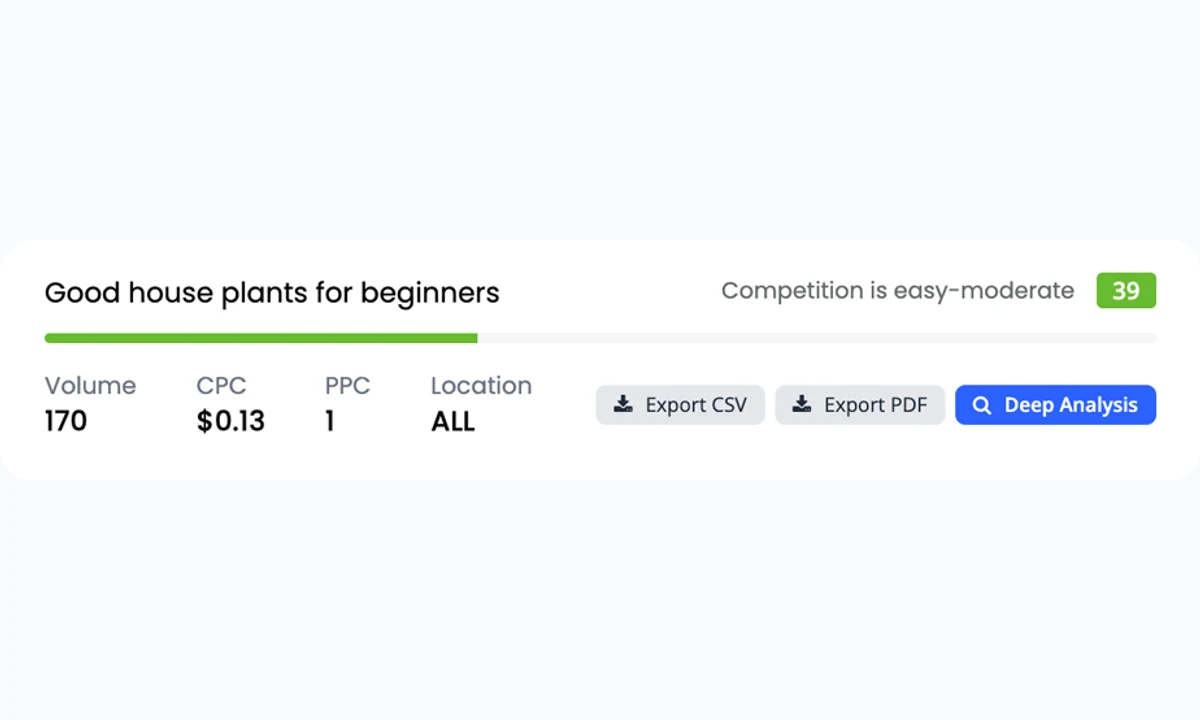
The first view combines volume, CPC, competition, and score so a page is not chosen only by instinct.
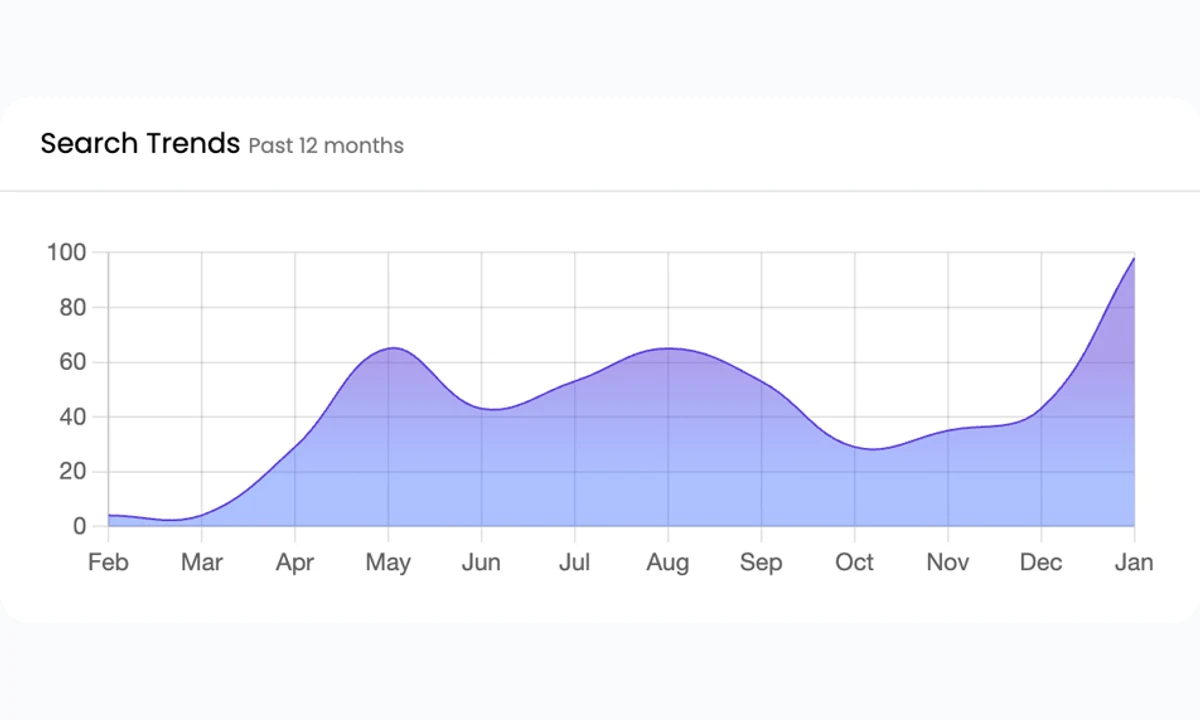
A query can be seasonal, emerging, or stable. Trend data helps choose the right publishing moment.
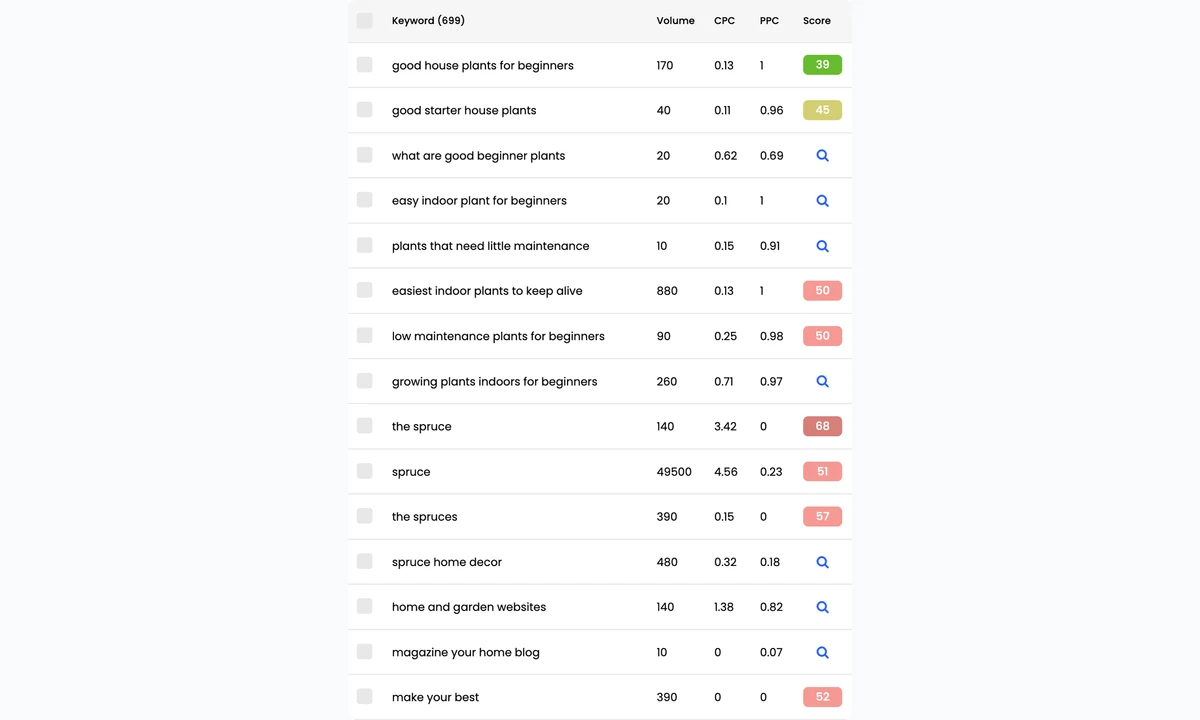
The list helps spot nearby phrases, more accessible variants, and terms that should be grouped together.
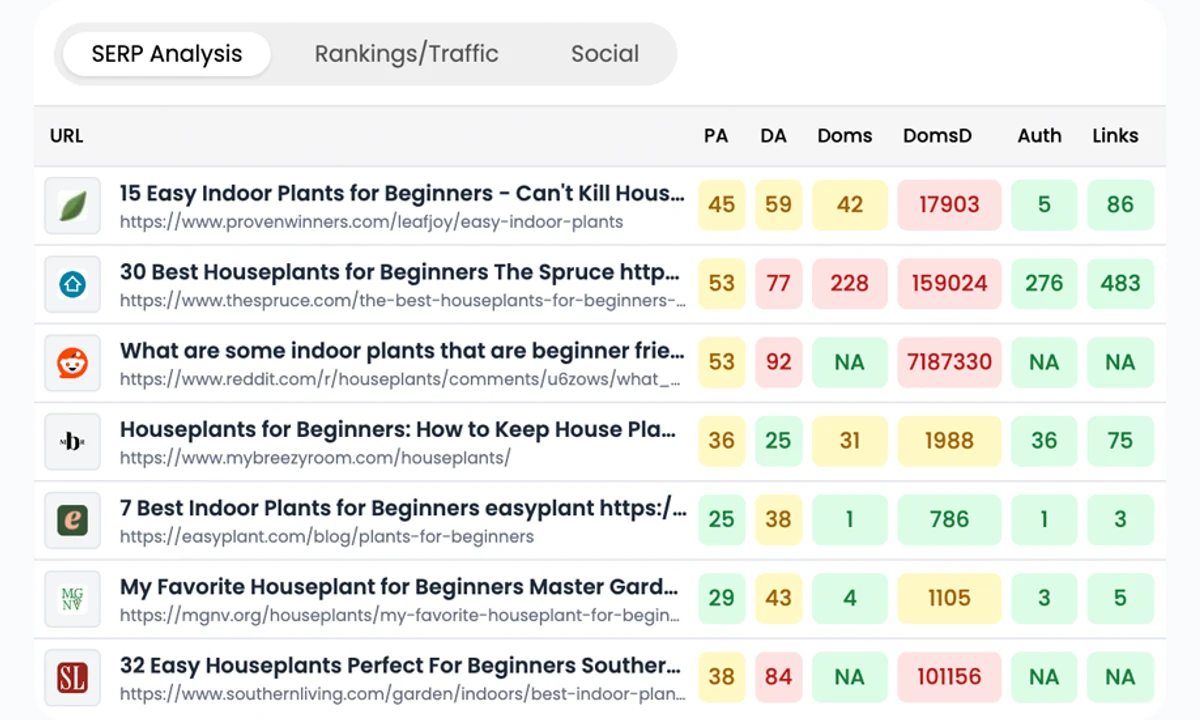
Before writing, the current results show authority, links, page types, social signals, and content formats.
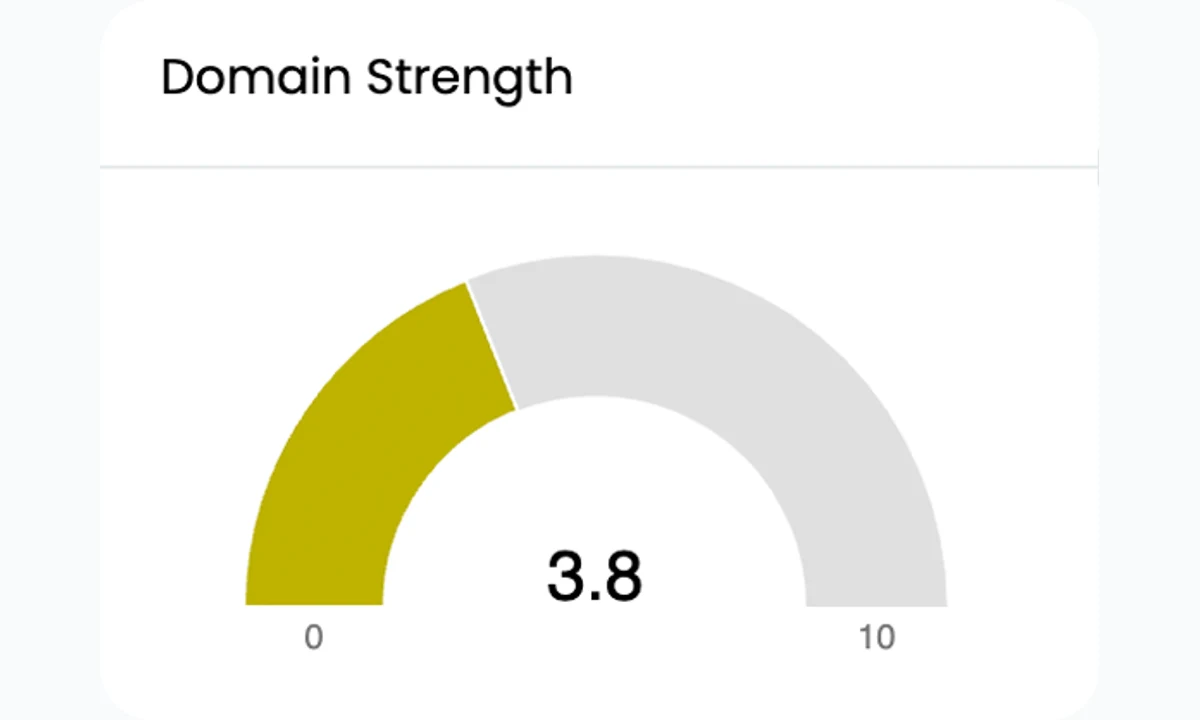
The domain score helps place a competitor or a target site inside a realistic SEO context.
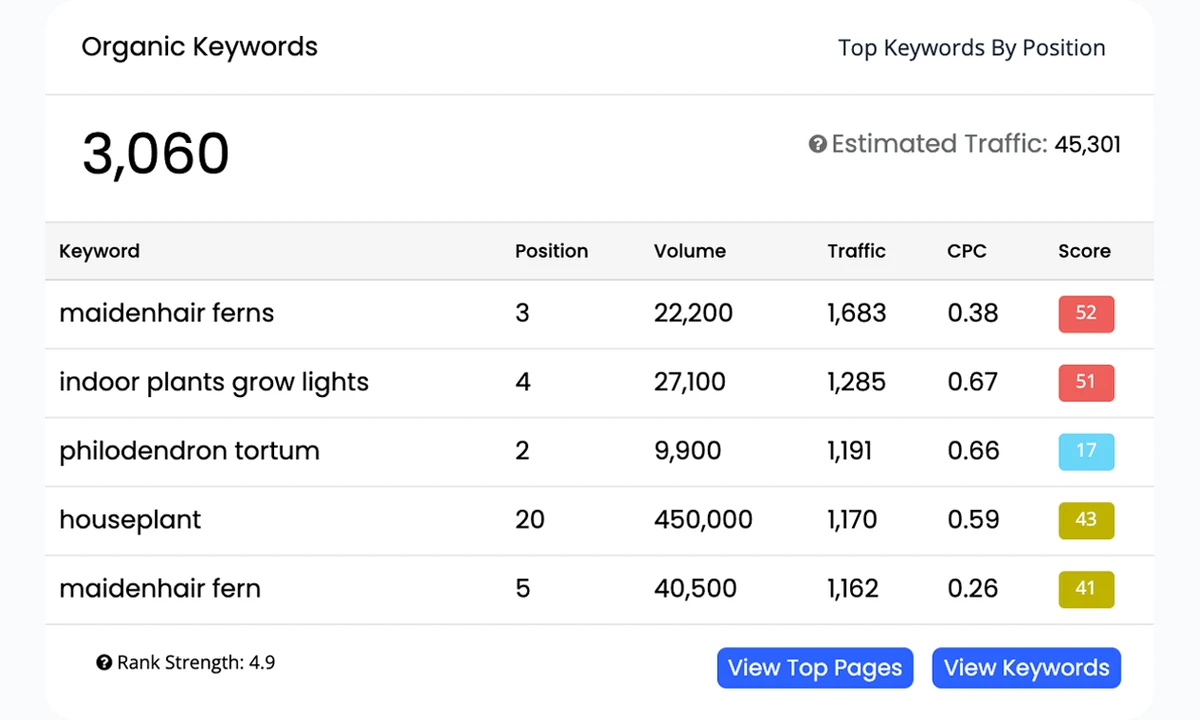
Competitor keywords reveal angles, priorities, and gaps that may not appear from seed research alone.
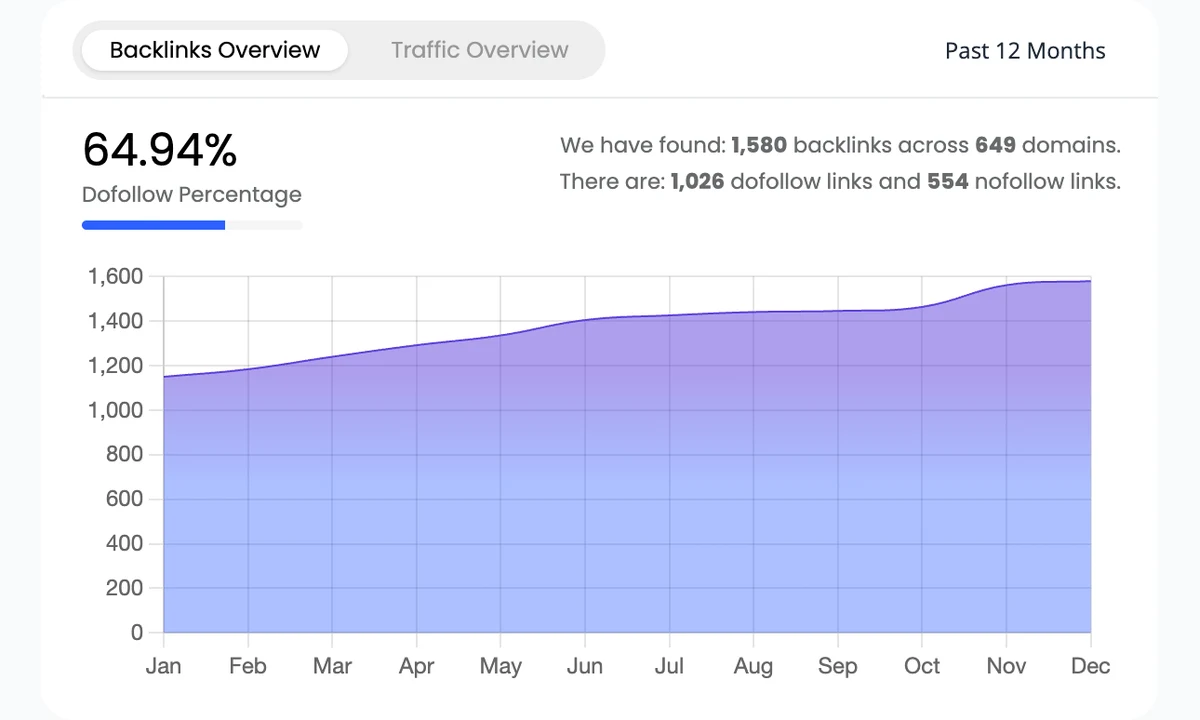
A links or domains chart helps separate stable incumbents from competitors that are accelerating.
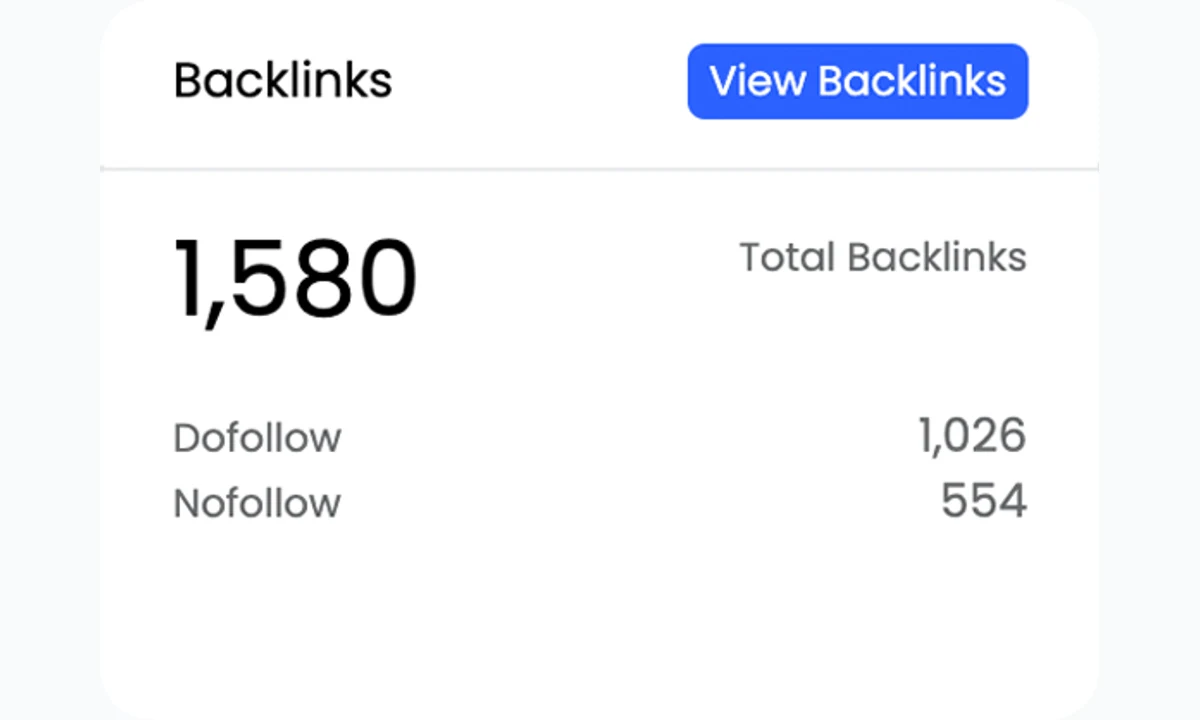
The quantity and nature of links give a useful signal before targeting a competitive query.
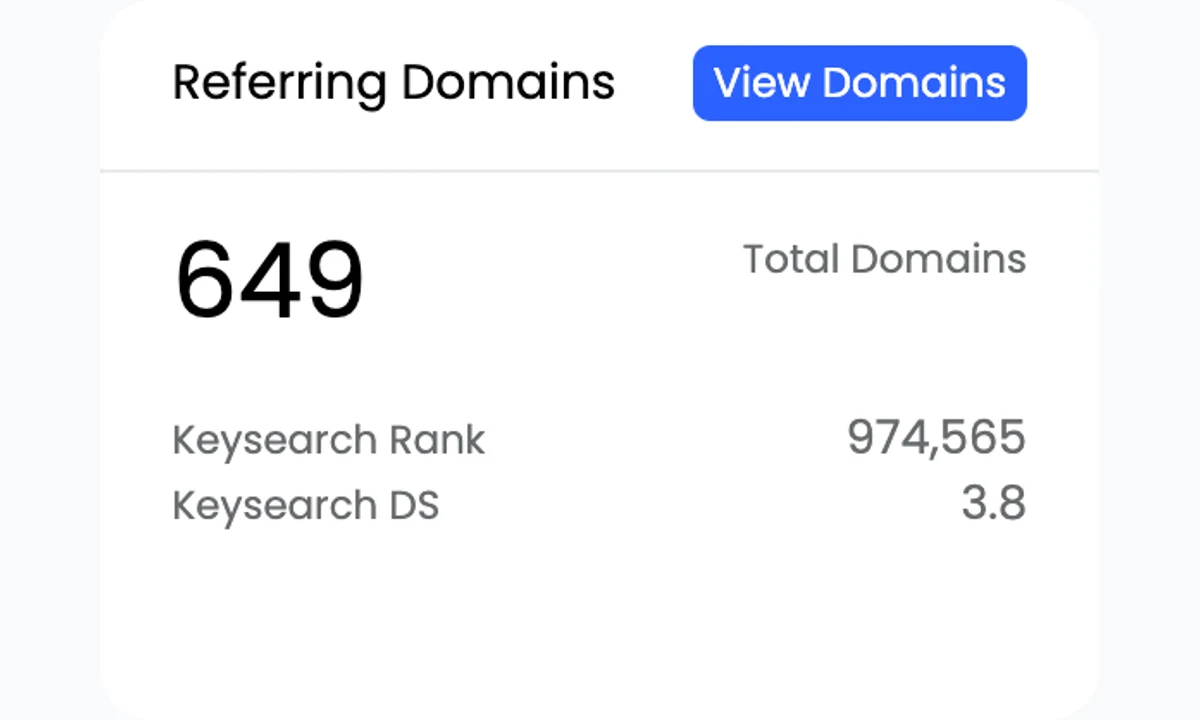
Referring domains complete the backlink reading and help estimate the offsite effort behind a SERP.
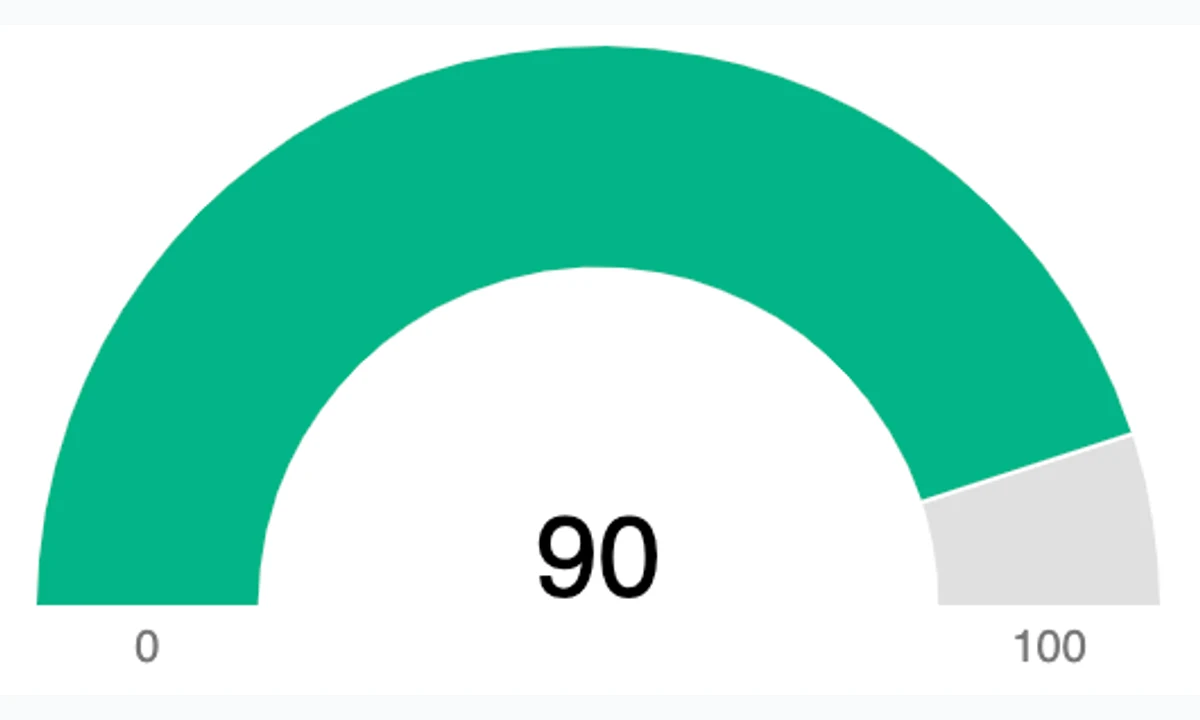
Once the angle is chosen, content scores help check coverage before publishing or refreshing a page.

The editor helps move from data to a clearer page: headings, paragraphs, variants, and enrichment.
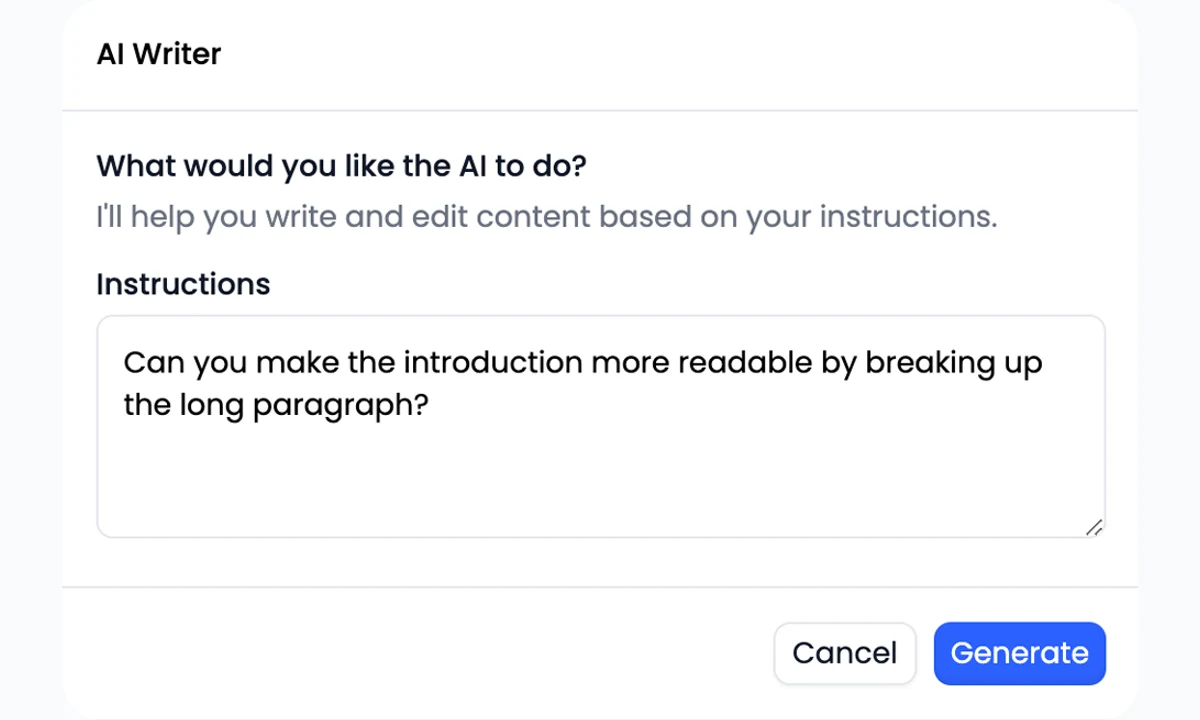
A precise request inside the editor can improve a passage, while the editorial decision still needs review.
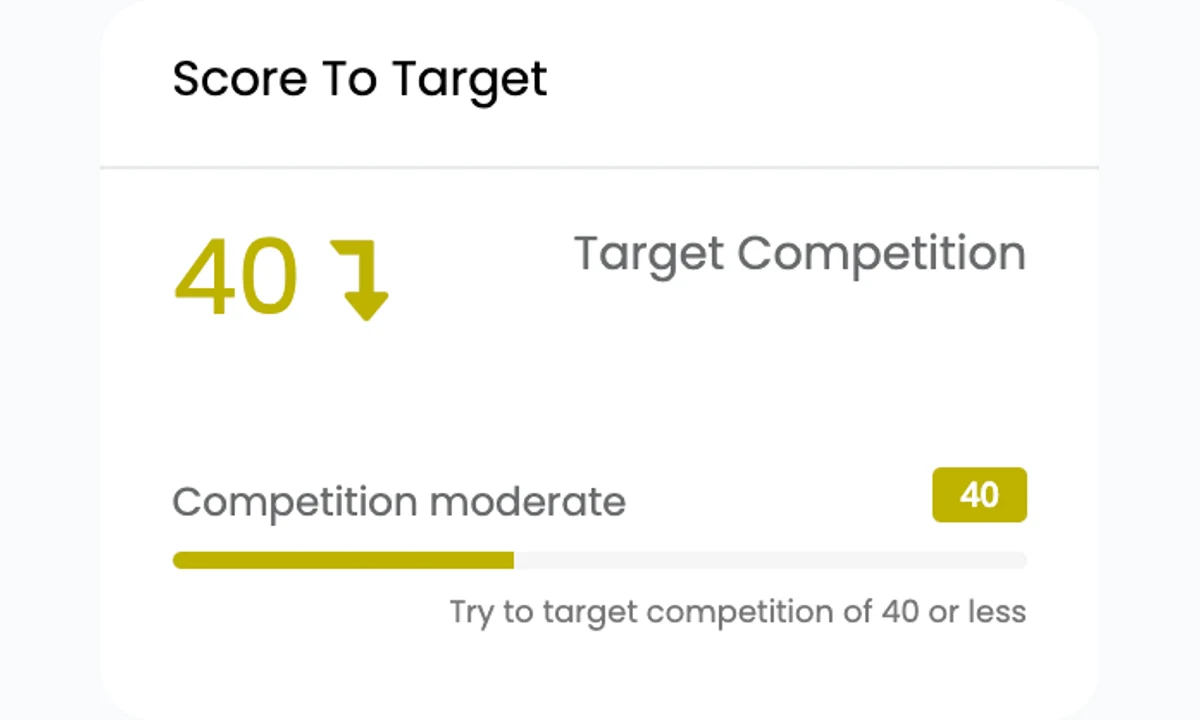
The target score helps decide whether the target is realistic for the site, page, and available resources.
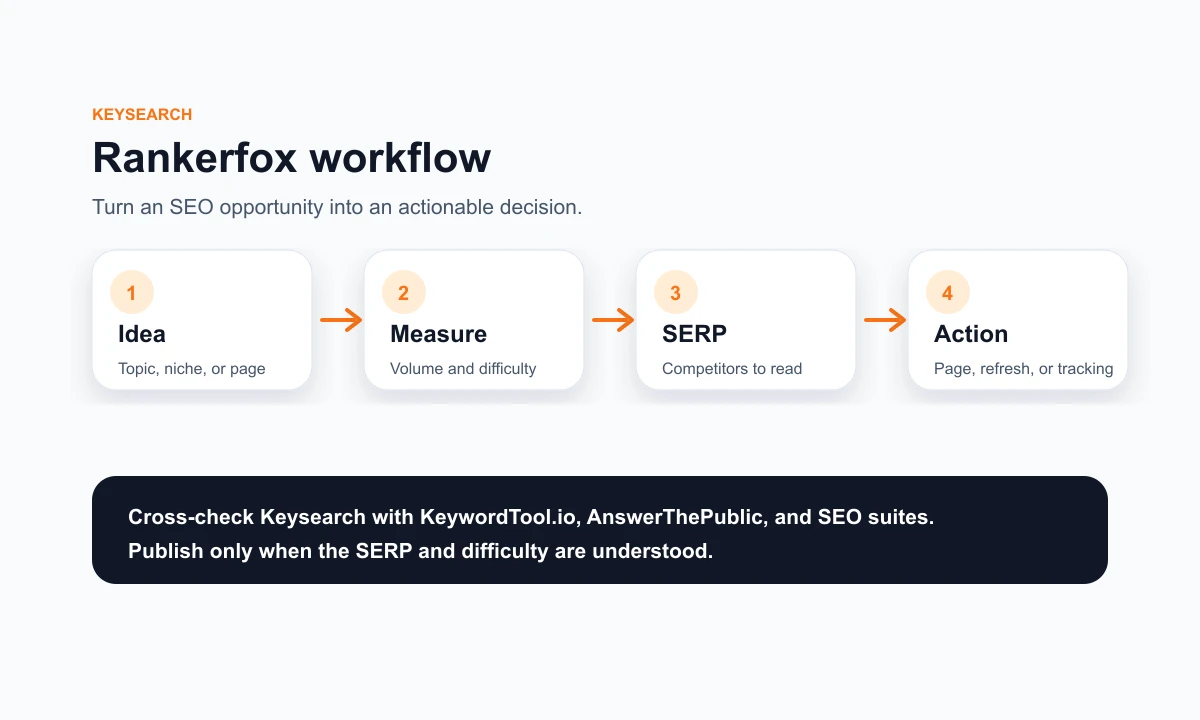
Keysearch fits between raw ideas and production: measure, read the SERP, compare competitors, then decide.
A Keysearch routine that avoids random pages
A useful session starts from a simple question: does this query deserve a page, a section, a refresh, or nothing for now? Keysearch gives the signals to decide more cleanly.
Start from an idea found with KeywordTool.io, AnswerThePublic, AlsoAsked, a competitor, or a client request.
- Write the expected intent in one sentence.
- Identify whether the topic is informational, comparative, or commercial.
- Separate nearby variants before analyzing scores.
Review volume, trend, CPC, difficulty score, and topic stability before moving too fast.
- Compare nearby variants before keeping a main keyword.
- Do not ignore a low-volume query when the intent is very clear.
- Save ideas for later when the season is not right.
The SERP shows what Google already accepts: guides, comparisons, product pages, local pages, or video content.
- Identify the content formats that keep coming back.
- Spot domains that are too strong and pages that feel more reachable.
- Look for what is missing: proof, freshness, angle, depth, or clarity.
The useful output is not a raw list, but a decision: produce, enrich, merge, monitor, or abandon.
- Define the target page and its role in the cluster.
- Prepare the needed sections before writing.
- Plan rank tracking and the next review date.
What Keysearch helps decide
A good Keysearch session ends with a concrete decision: produce, enrich, monitor, or delay the opportunity.
When intent is distinct, the SERP shows clear demand, and the difficulty is compatible with the site.
When the query improves an existing page without justifying a separate URL.
When a page is already close to the topic but lacks wording, proof, freshness, or structure.
When competitors are too strong, the season is wrong, or the page lacks internal data.
Where Keysearch fits in the SEO cluster
Keysearch complements discovery tools and broader SEO suites. It is especially useful when moving from an idea to a realistic priority.
KeywordTool.io expands phrases, questions, and variants across search platforms.
Keysearch then measures difficulty, reads the SERP, and helps choose the keywords worth acting on.
These tools help understand questions, People Also Ask branches, and editorial angles.
Keysearch adds a more metric-led view: volume, score, competition, domains, and content to produce.
These suites are broader for tracking, audits, competitors, and reporting.
Keysearch can be more direct when validating a query, SERP, and target page before production.
These tools help enrich content, work on semantic coverage, and check a page.
Keysearch prepares the upstream decision; content tools take over once the page is chosen.
Which Rankerfox plan includes Keysearch?
The trial helps verify Rankerfox access, explore the overall organization, and understand the catalog before choosing.
The Standard plan already covers several SEO and marketing needs. Keysearch belongs to the advanced selection.
Keysearch is planned for the Premium plan, alongside advanced tools for SEO research, competitive analysis, content, and tracking.
Rankerfox pages to read around Keysearch
Place Keysearch inside a full method: ideas, questions, difficulty, competitors, and page choices.
Find long-tail variants and phrases to test before measuring their potential.
Broaden questions and angles before choosing the topics that deserve work.
Read People Also Ask branches and turn questions into pages, sections, or FAQs.
Complete the decision with audits, rank tracking, keyword ideas, and competitor comparison.
Frequently asked questions about Keysearch with Rankerfox
These answers clarify Keysearch's role, its plan, and how to use it with the surrounding Rankerfox tools.
Add Keysearch to a sharper Premium SEO research routine
Compare Rankerfox plans, choose the level that fits your workload, then use Keysearch to turn keyword ideas into clearer decisions.